

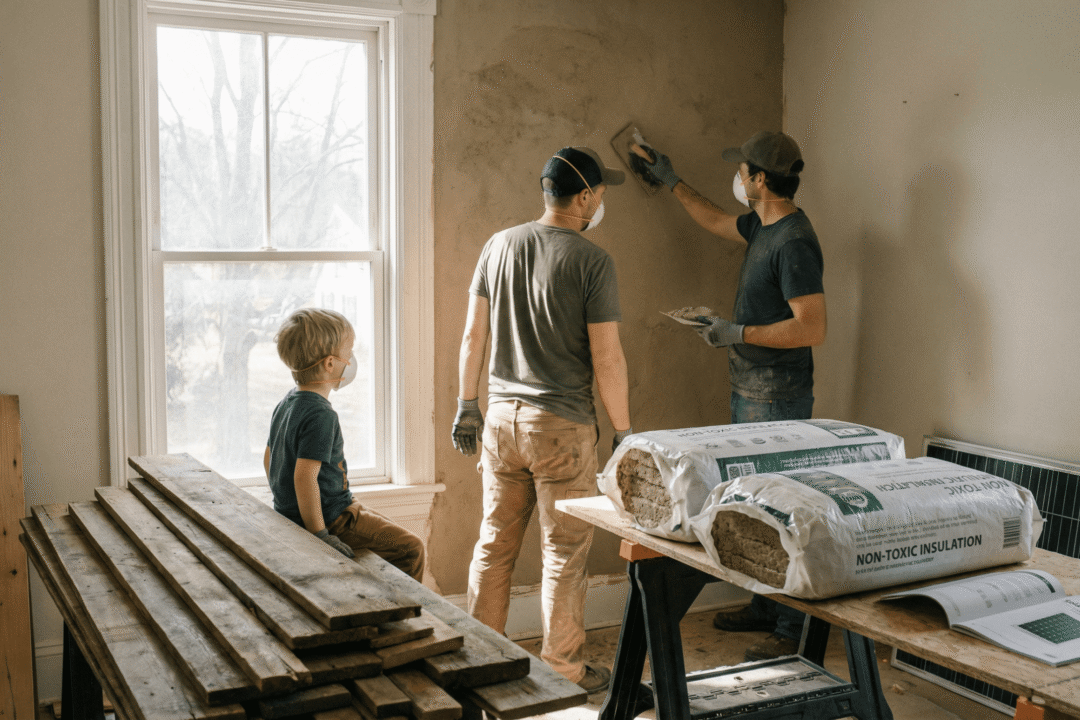

Eco-Friendly Materials: Sustainable Renovations in Calgary
Something’s shifting in Calgary’s renovation landscape – and it goes well beyond choosing quartz countertops over laminate. Homeowners across the city are asking smarter questions before they ever swing a hammer: Will this renovation lower my energy bills? Will it hold its value? Does it actually make my home perform better?
That’s the essence of sustainable home renovations Calgary homeowners are increasingly demanding; not just aesthetics, but renovations that deliver measurable, long-term results.
And honestly? It makes complete sense. Calgary’s climate is no joke. Brutal winters, wild temperature swings, and rising utility costs mean that a renovation which doesn’t account for performance is often just expensive cosmetics.
A well-planned, high-performance renovation doesn’t just improve how your home looks – it fundamentally changes how it lives, breathes, and costs you money year over year.
In practice, the most successful renovations balance three things: environmental impact, long-term home value, and livability. Getting that balance right requires some upfront thinking, particularly around budget strategy.
Which brings us to one of the most important (and most misunderstood) frameworks in renovation planning: the 30% rule for renovations, and how it can protect your investment from day one.
Planning for Sustainable Materials ROI: Understanding the 30% Rule and Your Renovation Budget
So you’re sold on the idea of a smarter, greener home – but how do you make sure the money actually makes sense? That’s where the 30% rule comes in, and it’s a solid starting point for any Calgary homeowner mapping out a renovation budget.
The rule is straightforward: your total renovation investment shouldn’t exceed 30% of your home’s current market value. It’s a guardrail, not a hard ceiling, but it helps keep spending realistic, relative to what you can realistically recover at resale. Those who adhered to it saw an average of a 15% increase in resale value compared to those who exceeded it.
According to a 2026 industry report by the Canadian Home Builders’ Association, homes with high-performance upgrades can reduce energy consumption by up to 30%, translating into significant savings on utility bills.
Here’s where eco-friendly home remodelling gets genuinely exciting from a financial standpoint – many high-performance upgrades sit at the sweet spot of strong ROI and meaningful energy savings. In practice, improvements like upgraded insulation, high-efficiency HVAC systems, and triple-pane windows tend to add measurable value while reducing monthly operating costs. That’s a double return most standard cosmetic renovations simply can’t match.
A renovation that lowers your energy bills while increasing your home’s value isn’t a trade-off – it’s a strategy.
However, it’s worth acknowledging that not every green upgrade delivers equal returns. Priorities shift depending on your home’s age, existing systems, and neighbourhood comparables. The most effective approach is pairing budget planning with detailed project specifications before breaking ground, which leads perfectly into the specific upgrades worth your attention in 2026.
8 Essential Improvements for a Sustainable Renovation in Calgary
Now that you’ve got a handle on budgeting and ROI, it’s time to get into the specifics – because not all sustainable upgrades are created equal. Some deliver outsized returns on comfort, energy savings, and resale value. Others sound great on paper but don’t move the needle much for Calgary’s particular climate.
Here are the eight improvements that consistently make the most impact for Calgary homeowners heading into 2026:
- High-efficiency insulation upgrades – especially in attics and exterior walls
- Triple-pane windows – critical for surviving those -30°C winters without spiking your energy bill
- Heat pump systems – increasingly viable even in Alberta’s cold climate
- In-floor radiant heating – particularly effective in kitchens and bathrooms
- Solar-ready electrical panels – future-proof your home without full solar costs upfront
- Smart home energy management systems – real-time monitoring that changes behaviour
- Low-VOC finishes and materials – better air quality, full stop
- Water-efficient fixtures – often overlooked, but impactful year-round
Research from the National Research Council of Canada shows that homes with these upgrades can experience up to a 23% reduction in heating and cooling costs, making them a wise investment for the long haul.
Partnering with a team that offers green design-build services means these improvements get planned as an integrated system, not bolted on as afterthoughts. In practice, that’s where the real efficiency gains happen.
Sustainable Materials: Selecting the Right Finishes for a Healthy Home
With your upgrade list sorted and your budget framework in place, the next big decision is what you’re actually building with. Materials matter — not just for aesthetics, but for indoor air quality, longevity, and the overall environmental footprint of your project.
When it comes to eco-conscious home additions and renovations, a practical rule of thumb is to evaluate finishes across a few key dimensions: embodied carbon, off-gassing potential, durability, and recyclability. Choosing right on all four fronts is where sustainable renovations really earn their stripes.
Here’s what to prioritize:
- Low-VOC and zero-VOC paints and adhesives: better air quality from day one
- FSC-certified wood and cabinetry: responsibly sourced, third-party verified
- Recycled-content insulation (like denim or cellulose): solid performance, low impact
- Locally sourced stone or tile: cuts transportation emissions and supports regional suppliers
- Non-toxic, formaldehyde-free engineered products: critical for cabinets and flooring
Sustainable materials don’t cost more when you factor in longevity. The cheapest finish is rarely the one you replace twice.
One practical approach is to work through material selections before construction begins, locking in specs early prevents costly substitutions mid-build.
The Design-Build Advantage: Why Full-Service Integration Matters in Sustainable Renovations in Calgary
Now here’s the part that ties it all together: how you execute matters just as much as what you build.
Sustainable renovations are inherently complex. You’re coordinating materials specs, mechanical systems, design intent, and budget, often simultaneously. When those pieces live across separate contractors and designers, things slip. Timelines stretch. Costs creep. Decisions get revisited.
A design-build approach solves this by keeping your entire team – designers, project managers, and carpenters – under one roof from concept through completion. There are no costly handoffs, no finger-pointing between trades, and no surprises on build day because everything gets locked in before a single wall opens up.
A fully integrated process is the difference between a sustainable home you planned and one you actually got built.
In practice, this means photo-real 3D renderings, finalized material selections, and a transparent client portal tracking every milestone. It also means accountability doesn’t disappear after the last coat of paint. A comprehensive warranty and scheduled check-ins keep your investment protected long after move-in.
Sustainable renovations are a long game. Partner accordingly.
The Financial Case: ROI and Market Premiums for Eco-Conscious Homes
Here’s something worth knowing before you commit to any renovation budget: sustainable upgrades aren’t just good for the planet, they’re quietly becoming one of the smartest financial moves you can make in Calgary’s real estate market.
The numbers back this up. According to data highlighted by Calgary Homes, green-certified homes consistently command a price premium over comparable conventional builds, and Alberta’s market is following that national trend. Buyers aren’t just tolerating eco-conscious features anymore, they’re actively seeking them out and paying for the privilege.
Speed of sale is another telling signal. Eco-friendly properties tend to move faster than traditional builds, and it’s not hard to understand why. A home with documented energy-efficient systems, certified materials, and lower operating costs presents a compelling value story that resonates with today’s more informed buyer. In a competitive market, that story closes deals.
Then there’s the utility cost hedge and this one matters more in Calgary than almost anywhere else in Canada. Heating a home through an Alberta winter isn’t cheap, and rising energy prices only compound the pressure. An eco-friendly home renovation that prioritizes high-efficiency systems and sustainable building materials essentially locks in long-term savings, insulating homeowners from future rate increases in a way that granite countertops simply can’t.
Perhaps the most interesting shift, though, is in what buyers now treat as quality signals. Natural stone, reclaimed hardwood, and high-performance systems have replaced sheer square footage as the markers of a premium home. As Sustainable Business Magazine notes, sustainable features are increasingly tied to perceived craftsmanship and long-term value rather than niche lifestyle preferences.
Sustainable materials aren’t a cost centre – they’re a value multiplier that pays dividends at resale, at the utility meter, and in daily quality of life.
The financial argument is compelling on its own, but the real leverage comes from how you build these upgrades into your home’s core systems which is exactly where energy efficiency tactics come in.
Energy Efficiency Tactics: The Upgrades That Work Hardest
Now that we’ve established the financial upside, it’s worth digging into where that value actually comes from. The short answer? The systems and upgrades you can’t see once the renovation’s done.
Triple-Pane Windows and Advanced Insulation
Calgary’s climate is unforgiving… anyone who’s felt a February cold snap knows exactly what that means for heating bills. Triple-pane windows are no longer a premium add-on; they’re becoming the baseline for serious renovations. Paired with advanced air sealing and high-performance insulation, they dramatically cut heat loss while delivering something unexpected: genuine acoustic luxury. A well-sealed home is a noticeably quieter home, and in Calgary’s urban neighbourhoods, that matters.
Smart Systems and Renewable Energy
Green home remodeling today goes well beyond swapping out fixtures. Homeowners are integrating smart HVAC systems, water-saving fixtures, and solar panel installations into cohesive energy strategies. According to Saint-Gobain’s 2024 Sustainable Construction Barometer, sustainable building priorities are rising sharply across Canada – a trend very much reflected in Calgary’s renovation market.
Energy-efficient appliances and thoughtful design layouts (flexible, multi-purpose spaces that reduce the square footage you need to heat and cool) compound these savings further.
It’s worth noting that roughly 30% of mortgage consumers are now actively prioritising these “hidden” upgrades when purchasing or financing homes, signalling a real cultural shift in what buyers value.
The smartest renovations treat energy efficiency not as a feature, but as the foundation everything else is built on.
Of course, knowing which systems to prioritize is only half the equation. The materials you choose work hand-in-hand with these tactics and that’s exactly where we’re headed next.
Sustainable Building Materials: Eco-Friendly Choices for Your Next Project
So we’ve covered the why. now let’s get into the what. Choosing the right materials is where an energy-efficient home renovation really takes shape, and the options available to Calgary homeowners today are genuinely impressive. Whether you’re planning a full kitchen overhaul or a whole-home remodel, here’s a practical breakdown of the materials worth knowing about.
Natural Stone and Reclaimed Surfaces
Natural stone (think quartzite, slate, and granite) remains one of the highest-ROI choices for kitchens and bathrooms. It’s durable, timeless, and requires minimal replacement over a home’s lifespan, which is as sustainable as it gets. On a similar note, reclaimed materials like salvaged wood beams, antique brick, and vintage tile bring genuine character that can’t be replicated by anything new. They reduce landfill waste, carry embodied history, and often outperform newer alternatives in durability. Sourcing them locally in Calgary adds another layer of sustainability to the equation.
Advanced Insulation for Calgary’s Climate
Calgary’s thermal swings are no joke; the city can see dramatic temperature shifts within a single day, let alone across seasons. That’s why advanced insulation systems (think spray foam, rigid mineral wool, and airtight building envelopes) are non-negotiable for any serious renovation here. According to construction sustainability research, high-performance insulation is consistently ranked among the most impactful material choices for long-term energy reduction. It’s one of those upgrades that pays for itself… and then keeps paying.
Rapidly Renewable Flooring Options
Bamboo and cork have moved well beyond novelty status. Both are rapidly renewable resources: bamboo matures in three to five years, compared to decades for hardwood. And both deliver legitimate luxury underfoot. Cork offers natural sound dampening and thermal insulation, while bamboo’s hardness rating rivals traditional hardwoods. For a high-end renovation, they’re a genuinely compelling alternative.
Recycled and Low-VOC Materials
Recycled content materials, including glass countertops, reclaimed metal fixtures, and recycled-content tile, are increasingly sophisticated in appearance and finish quality. And while low-VOC finishes are technically in a category of their own, they’re worth flagging here as the invisible baseline for any premium interior specification.
What goes into those finishes matters more than most homeowners realize. That’s exactly what we’ll look at next.
Health as the Ultimate Luxury: Low-VOC and Indoor Air Quality
We’ve talked a lot about materials from the outside in – how they perform, how they’re sourced, how they hold up. But there’s another dimension to sustainable building that doesn’t get nearly enough attention: what those materials are doing to the air you’re breathing every single day.
The Hidden Cost of Traditional Luxury Finishes
Many conventional high-end finishes such as lacquered cabinetry, solvent-based paints, synthetic adhesives, release volatile organic compounds (VOCs) long after installation is complete. This process, known as off-gassing, can persist for months or even years, quietly degrading your indoor air quality (IAQ). In a tightly sealed Calgary home built for energy efficiency, that’s a real concern.
Specifying Healthier Alternatives
This is where low-VOC building materials become non-negotiable for a truly luxury renovation. The specification list matters enormously:
- Paints and primers with low- or zero-VOC formulations
- Cabinetry made with formaldehyde-free engineered wood and water-based finishes
- Adhesives and sealants that meet strict emissions standards
A healthy home isn’t just a feel-good concept — it’s a measurable standard that serious renovators now build to.
In practice, the healthiest homes combine smart material choices with proper ventilation design, creating an environment that’s genuinely restorative rather than just beautiful.
Choosing these materials connects directly to the bigger picture of how your renovation is designed and executed from the start – which is exactly what we’ll get into next.
Navigating the Sustainable Design-Build Process in Calgary
Now that you know what to look for in materials and how they affect your indoor environment, the next step is figuring out how to actually bring it all together – and who helps you do it.
Local sourcing is one of the most impactful decisions you can make in sustainable remodeling Calgary homeowners often overlook. Shipping materials across the country (or the globe) adds significant embodied carbon – the emissions baked into a product before it ever reaches your home. Choosing Alberta-sourced stone, lumber, or suppliers within the region cuts that footprint considerably.
When vetting a contractor for green building expertise, ask specific questions: Do they understand embodied carbon? Can they suggest lower-impact alternatives mid-project? A design-build firm with in-house designers and project managers (all working from a single integrated process) is better positioned to weave sustainability into the design phase, not bolt it on as an afterthought after budgets are set.
Sustainability works best when it’s built into the blueprint, not squeezed into the budget at the end.
Getting those decisions made early, like material selections, energy upgrades, and sourcing choices, is where the real impact happens. Ready to start that conversation? The next piece of the puzzle is choosing the right renovation partner.
An Eco-Friendly Renovation Starts With the Right Partner
The renovator you choose shapes everything about how eco-friendly your project actually turns out to be. Their process, their values, their supplier relationships all flows downstream into your finished home.
In sustainable residential design-build Calgary, the best teams don’t just swap in greener products. They think holistically about the entire project lifecycle, including what happens to your existing home during demolition.
A responsible approach to demolition looks like this:
- Diverting materials from landfill: salvaging wood, tile, drywall, and metals for recycling rather than defaulting to the dump
- Saving what’s still serviceable: cabinets in good condition, working appliances, and fixtures can be donated to organizations like Habitat for Humanity ReStores, giving them a second life
- Suggesting energy-efficient upgrades along the way: a great design-build team will flag opportunities you might not have considered, like swapping in LED lighting, better insulation, or ENERGY STAR-rated appliances while walls are already open
- Purchasing materials locally:sourcing from Calgary and Alberta-based suppliers cuts transportation emissions and supports the regional economy
The renovator who treats your home thoughtfully during demolition will treat it thoughtfully during construction, too. That consistency of care,from first conversation to final walkthrough, is what separates a truly sustainable renovation from one that’s just checking boxes.
Choosing the right team isn’t a small decision. Make it count.
Key Takeaways
- Paints and primers with low- or zero-VOC formulations
- Cabinetry made with formaldehyde-free engineered wood and water-based finishes
- Adhesives and sealants that meet strict emissions standards
- Diverting materials from landfill – salvaging wood, tile, drywall, and metals for recycling rather than defaulting to the dump
- Saving what’s still serviceable – cabinets in good condition, working appliances, and fixtures can be donated to organizations like Habitat for Humanity ReStores, giving them a second life