


WORK
Main Floor Renovation
YEAR
2026
SIGNAL HILL
SIGNAL HILL RENOVATION
Project Overview
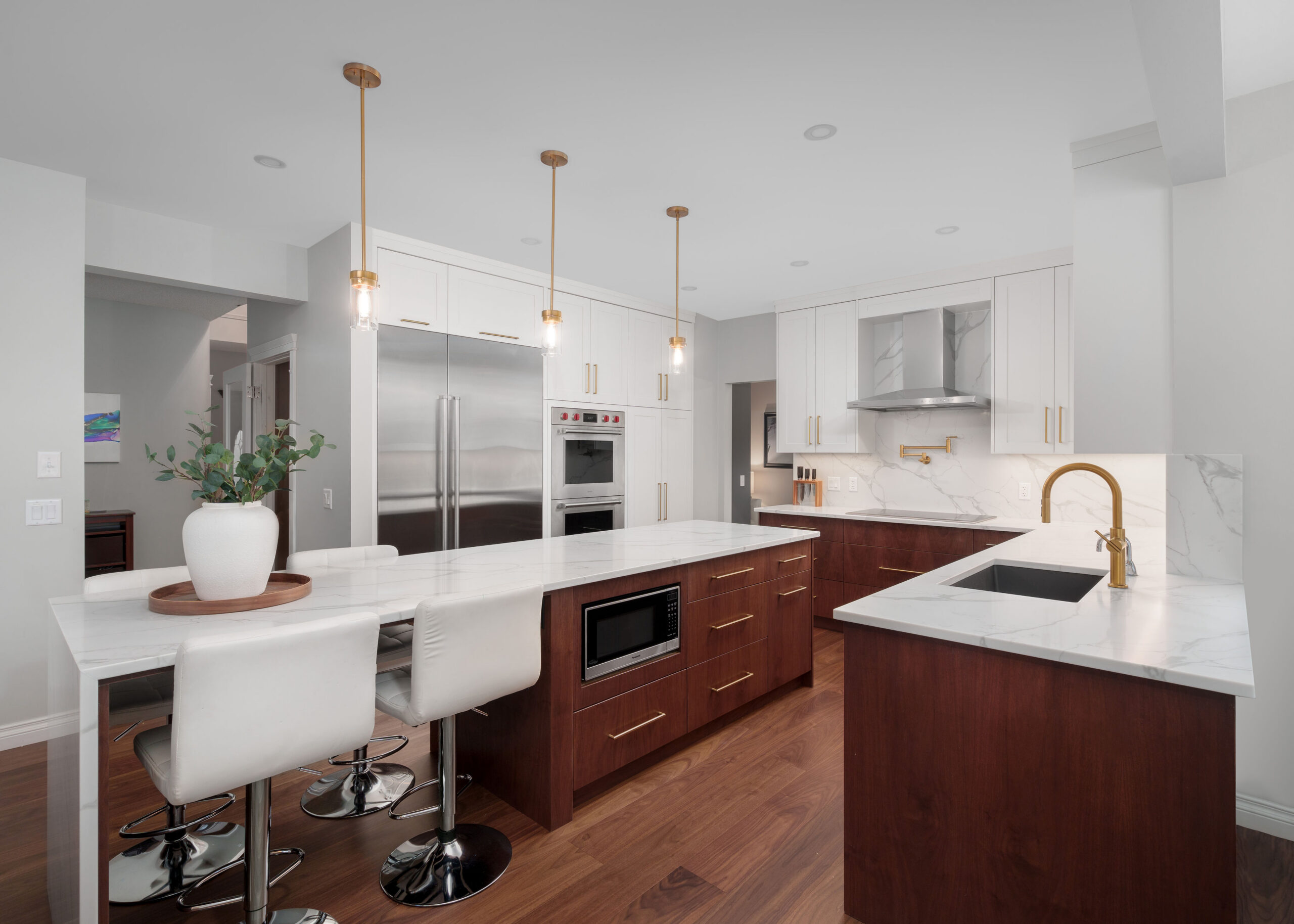
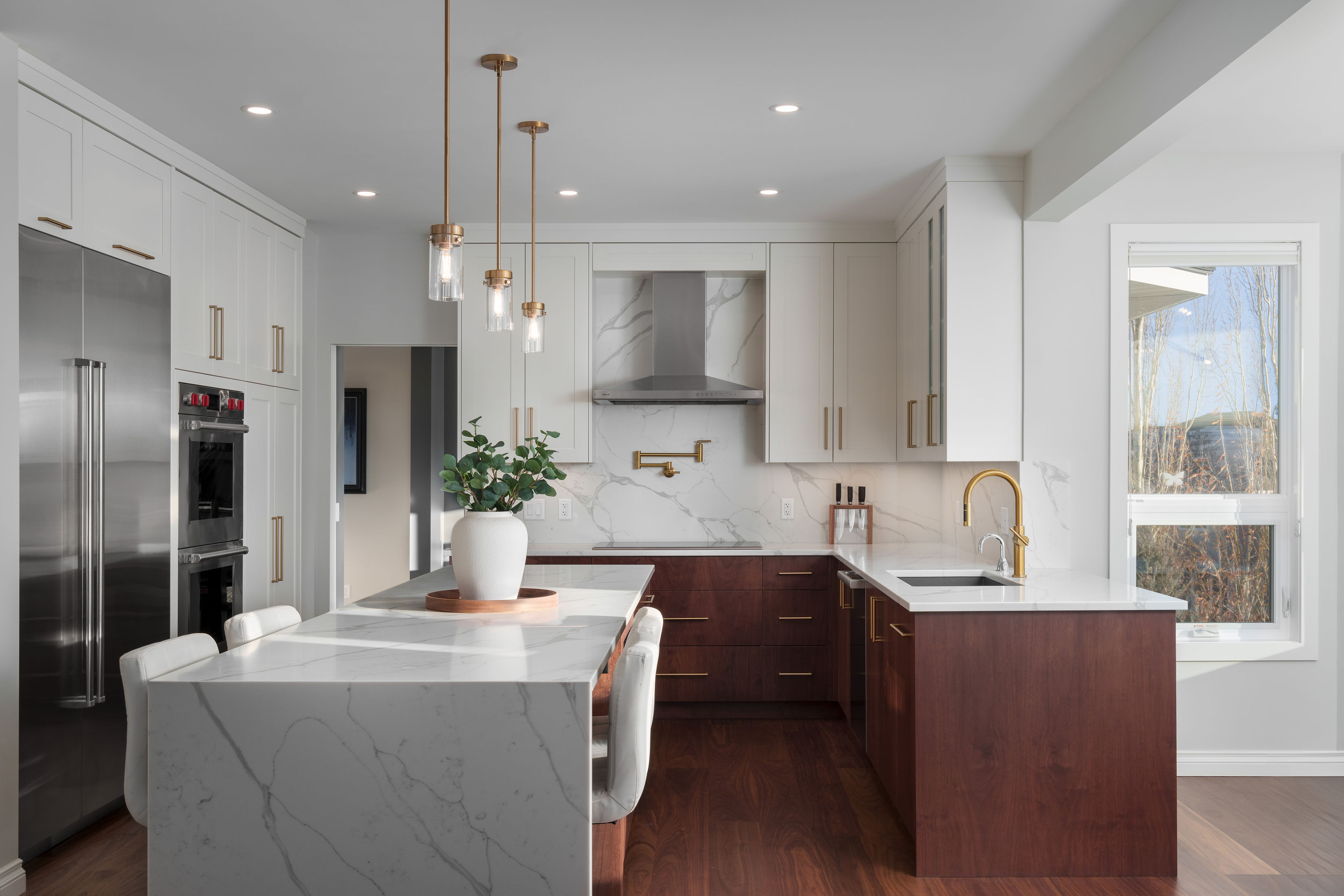
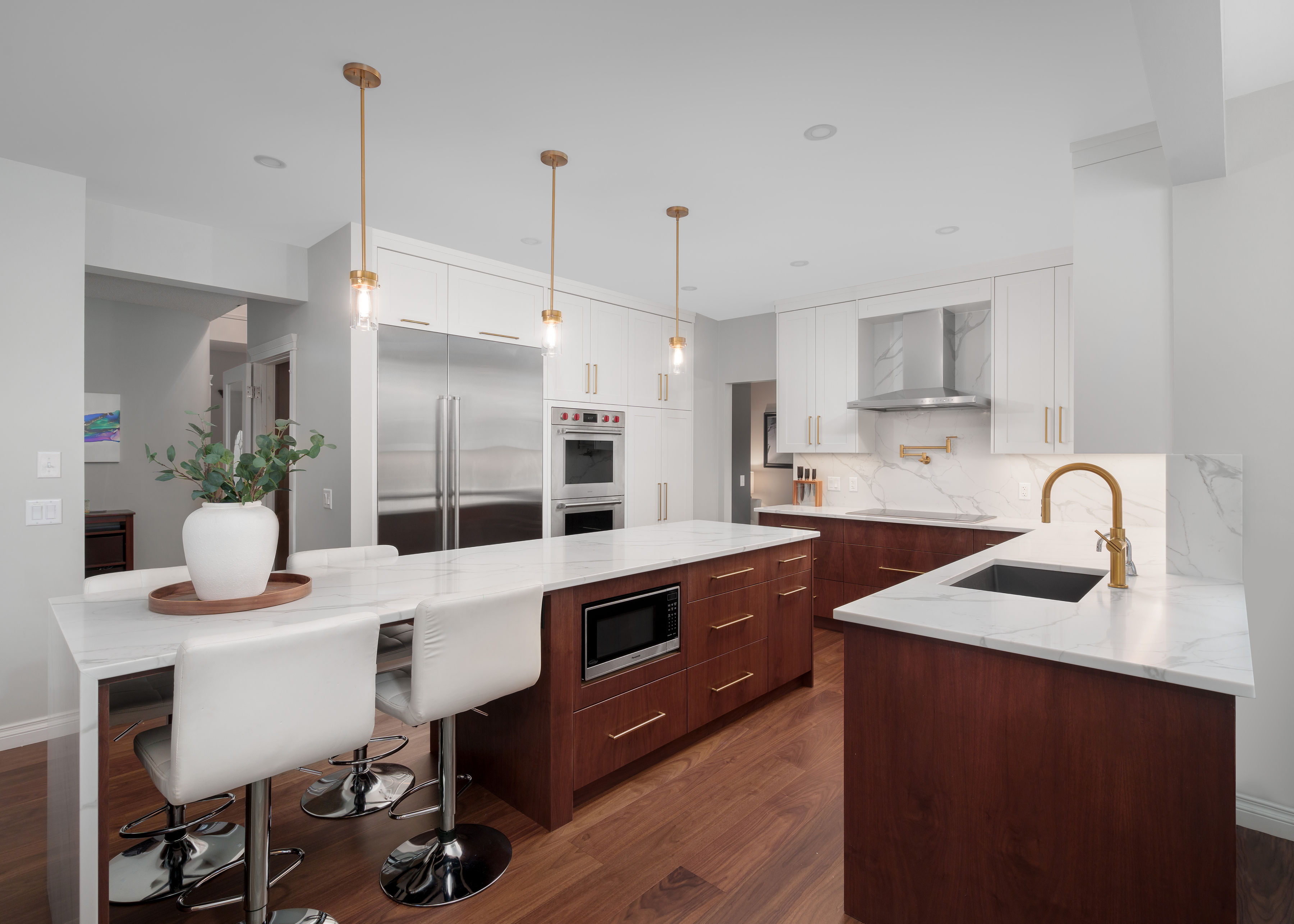
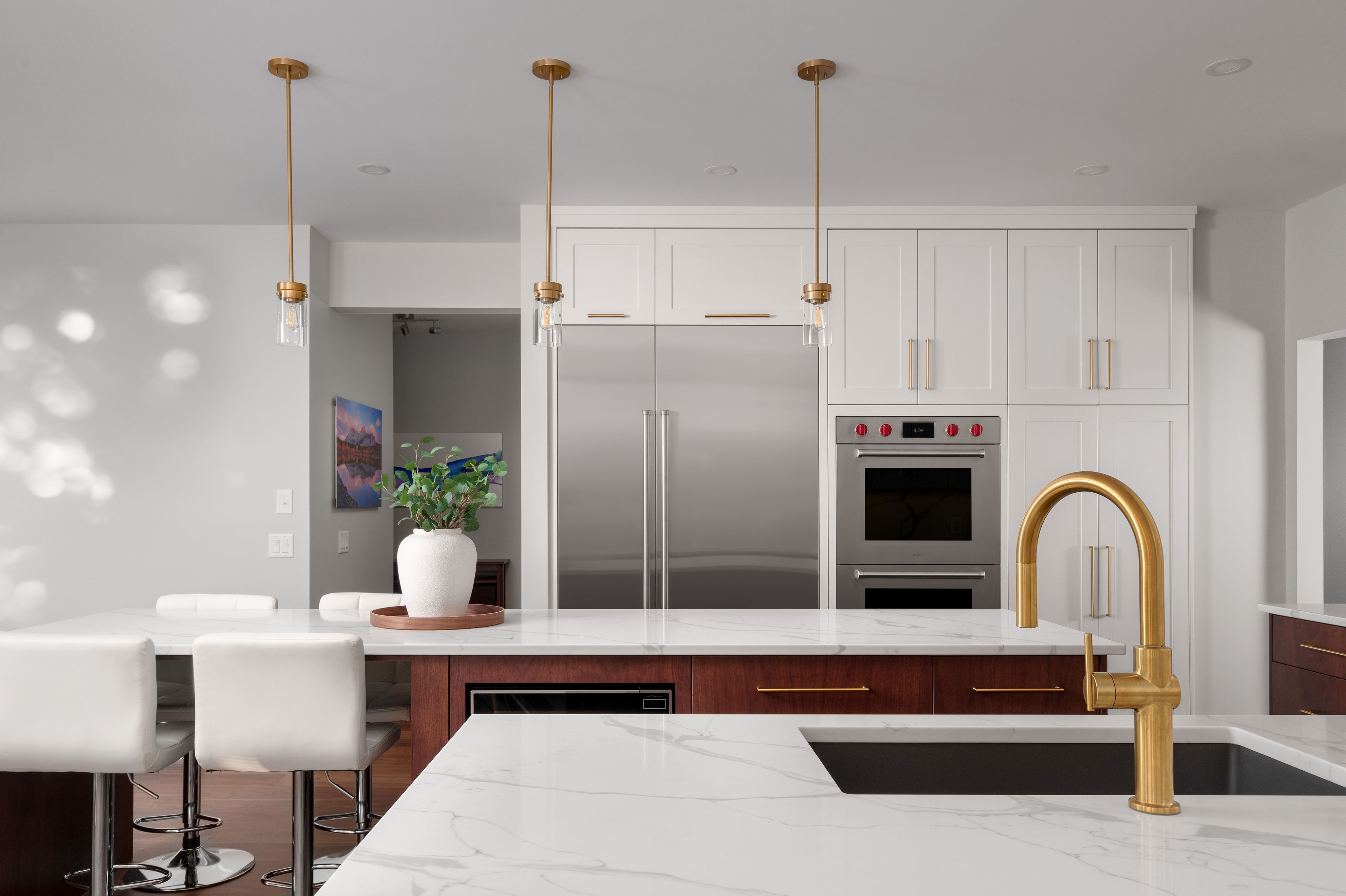
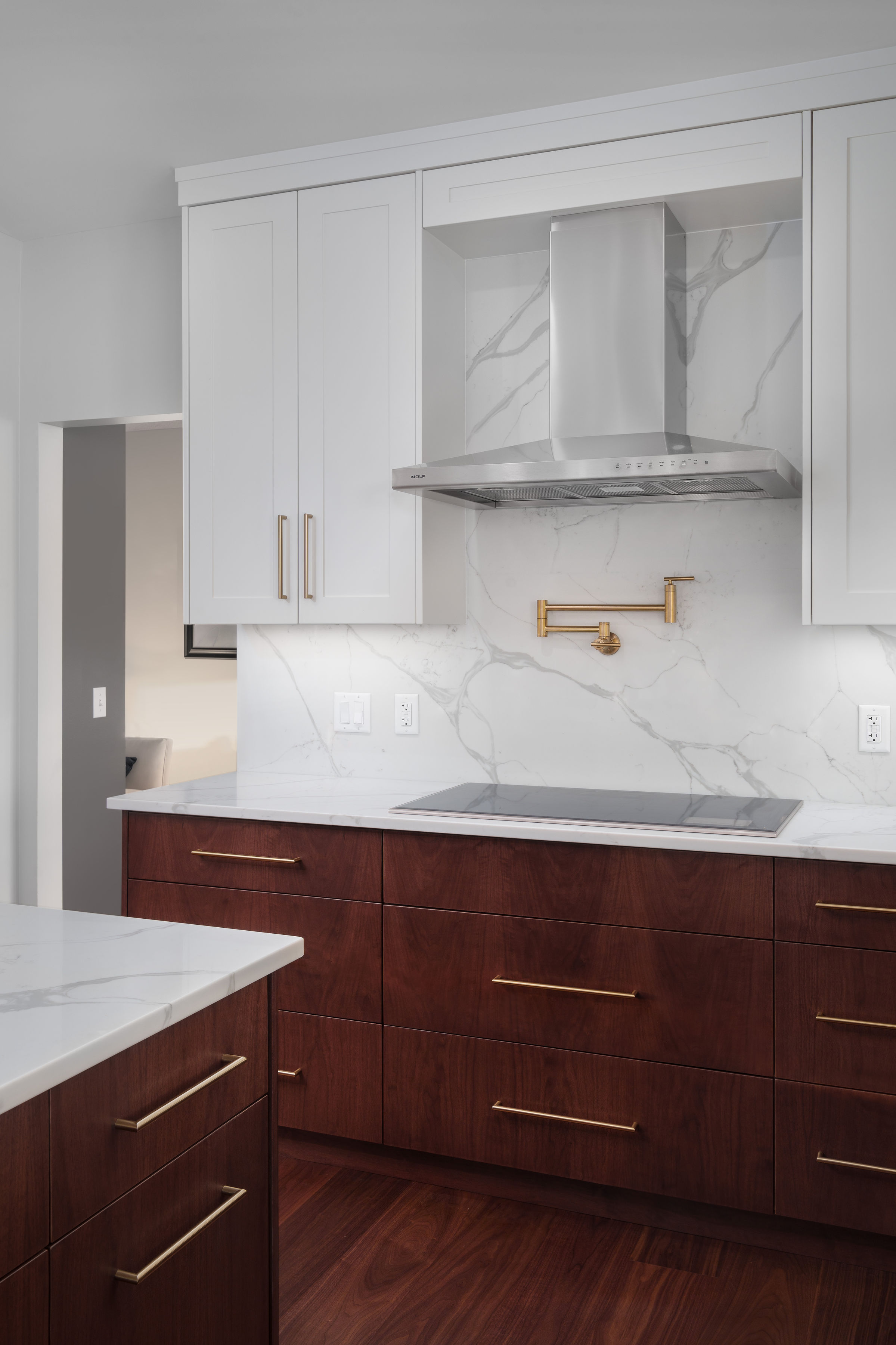
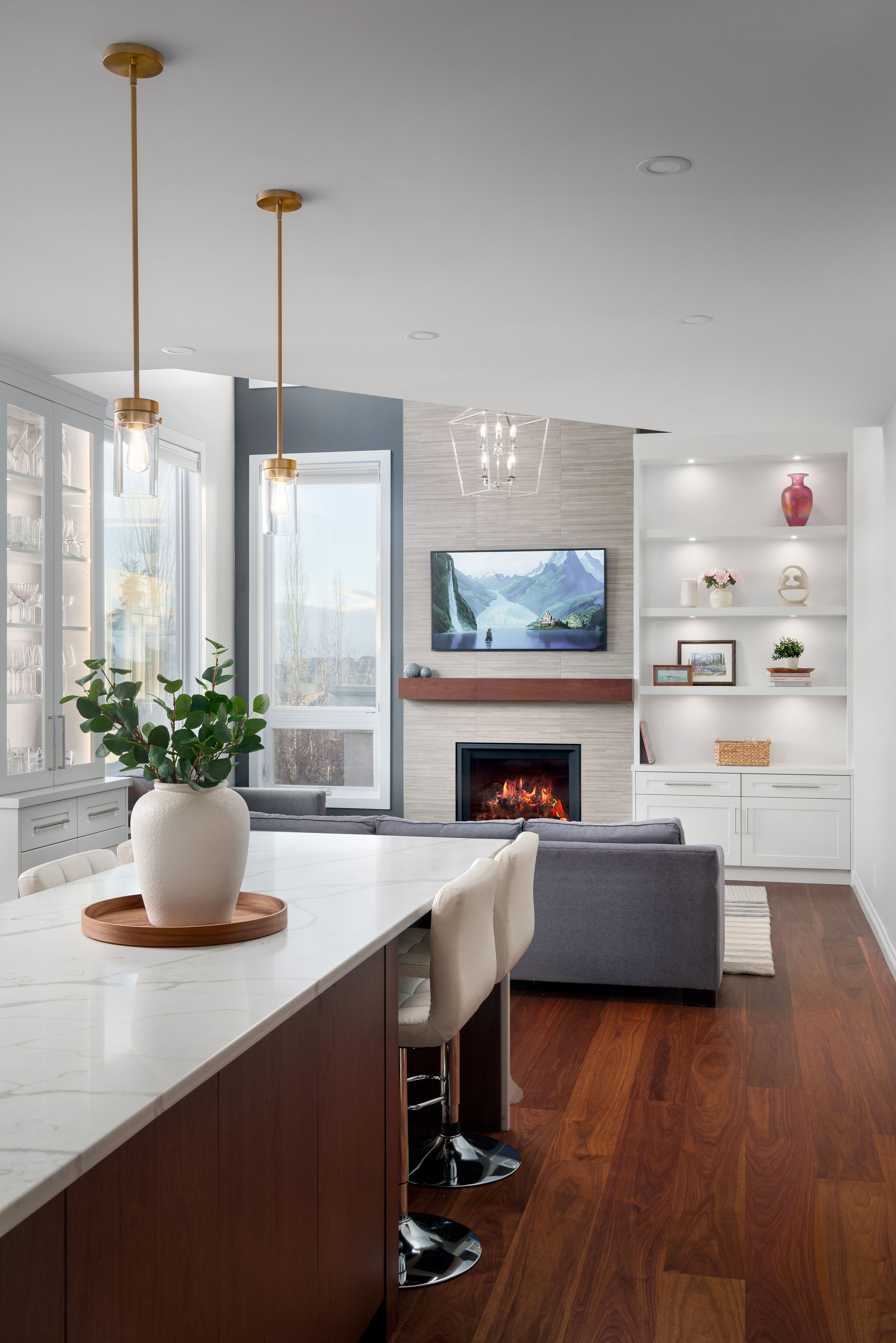
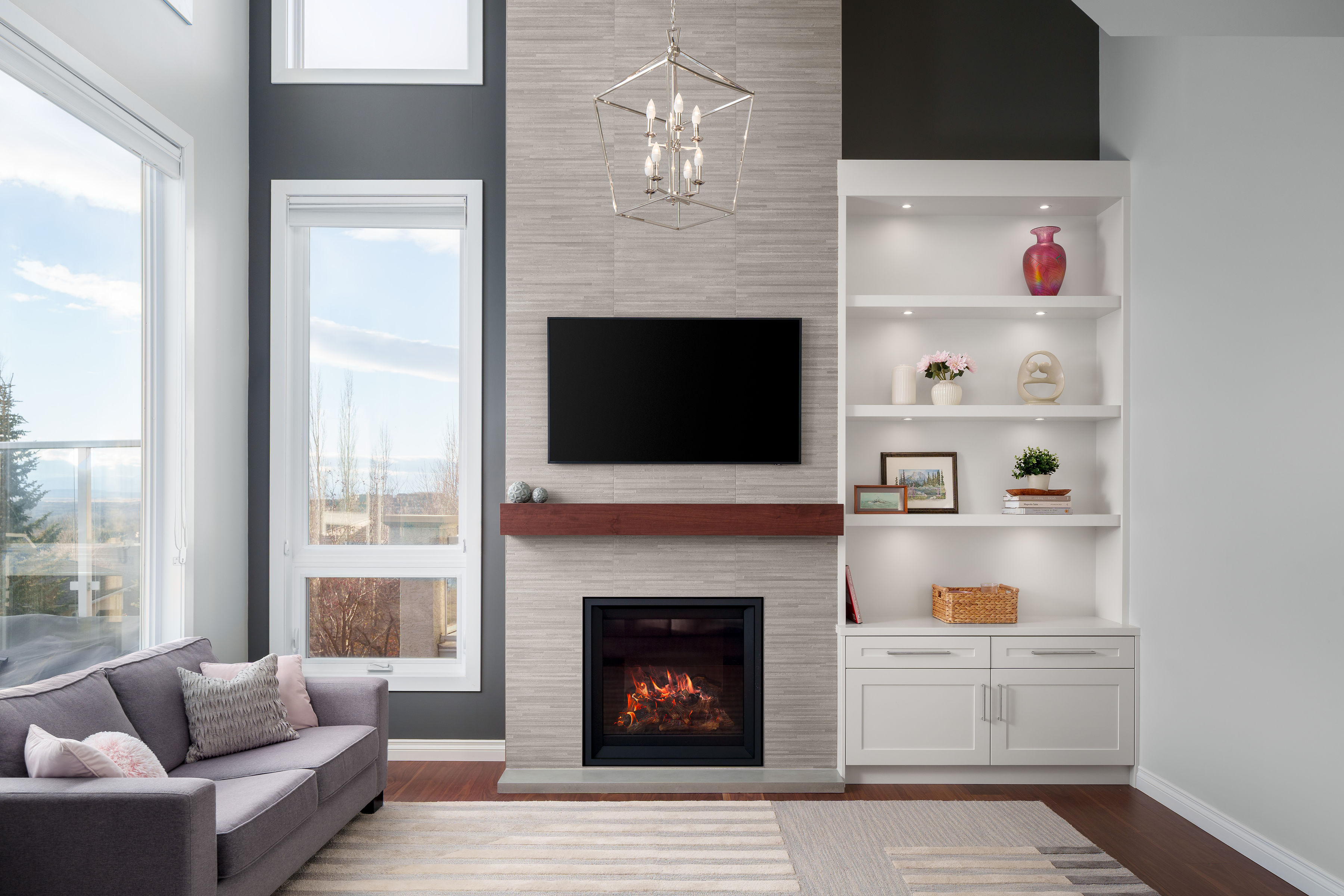
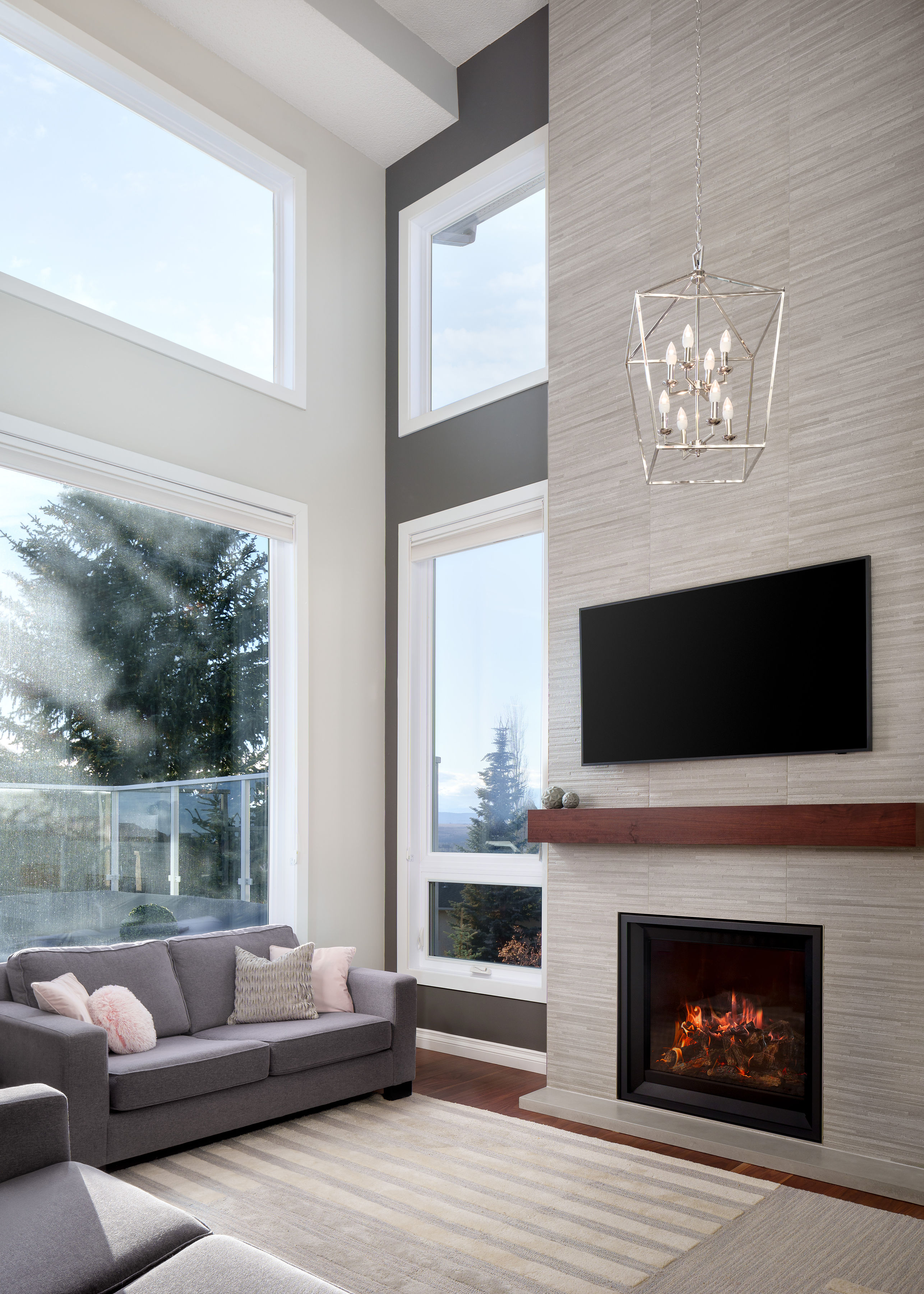
This Signal Hill kitchen renovation replaced a dated, heavily detailed kitchen with a calm, modern main-floor hub designed for everyday family life. The new layout stays within the kitchen’s original footprint, but every inch was reconsidered to improve storage, circulation, lighting, and connection to the adjacent dining nook and family room. Warm walnut lowers, crisp painted uppers, brass accents, quartz surfaces, and continuous flooring bring the space into a brighter, more cohesive era.
Key Features
- Kitchen renovation in Signal Hill
- Large waterfall quartz island
- Walnut lower cabinetry with painted upper millwork
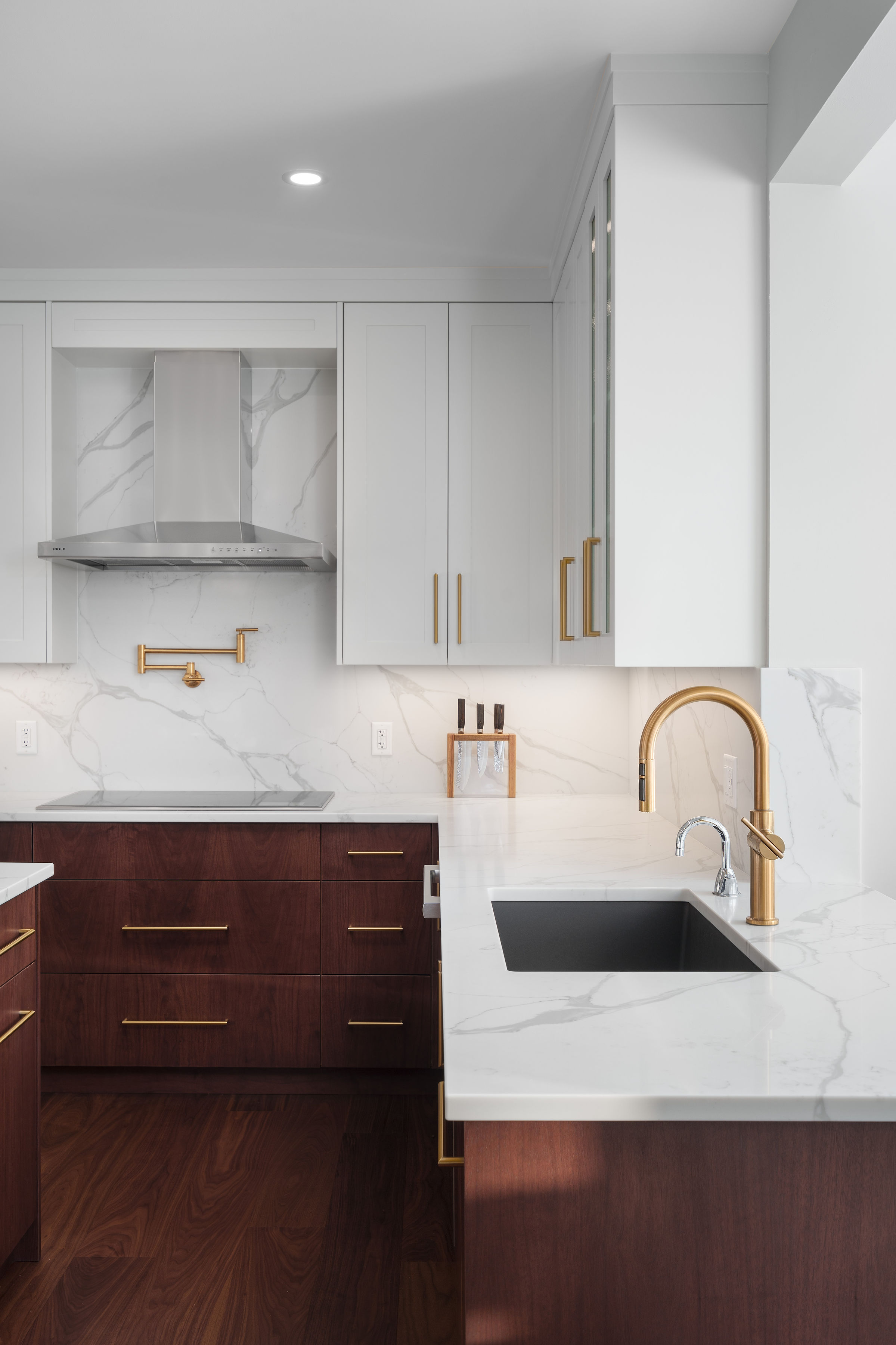
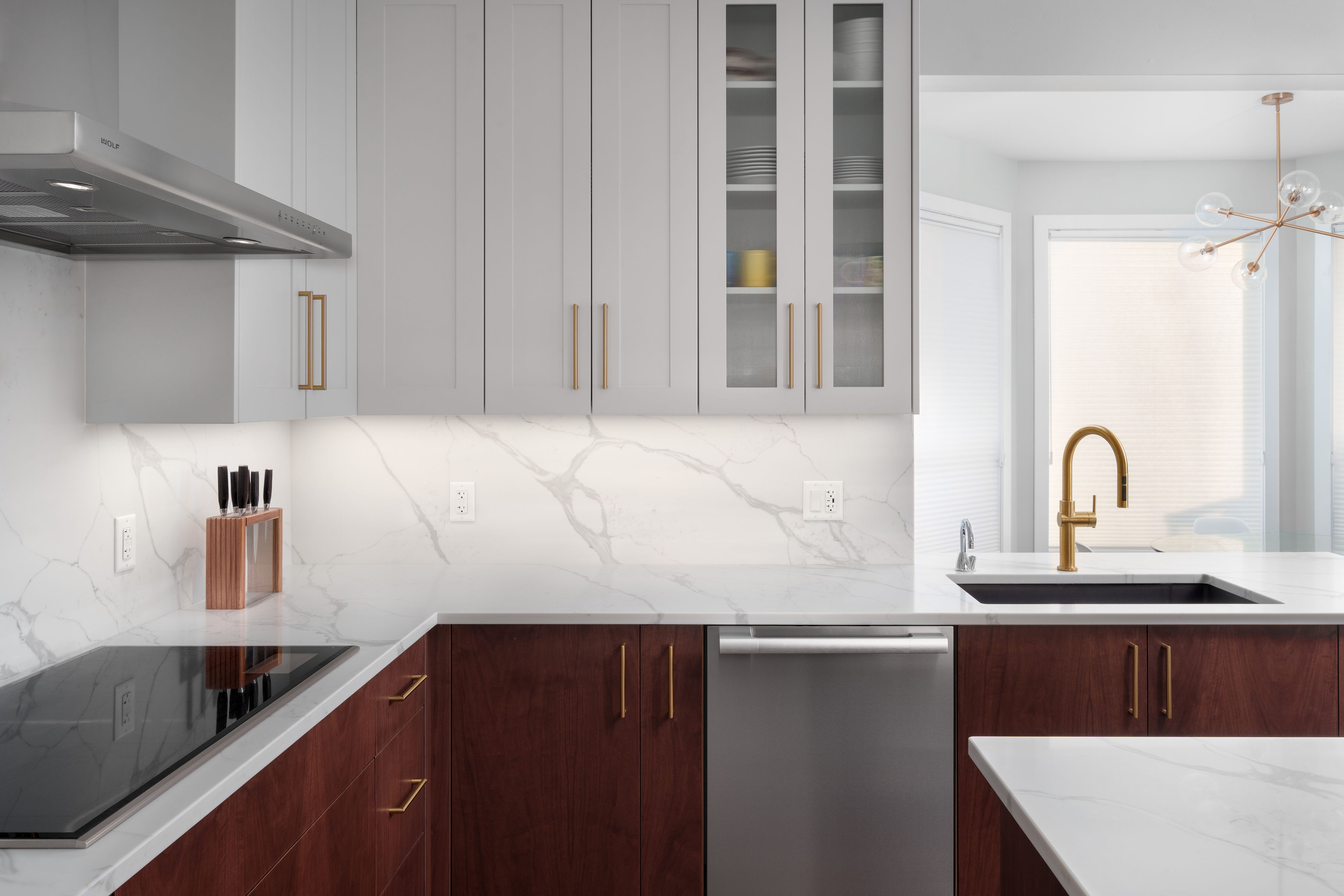
- Full-height quartz backsplash behind the range
- Induction range with stainless chimney hood and brass pot filler
- Apron sink with brushed-gold faucet
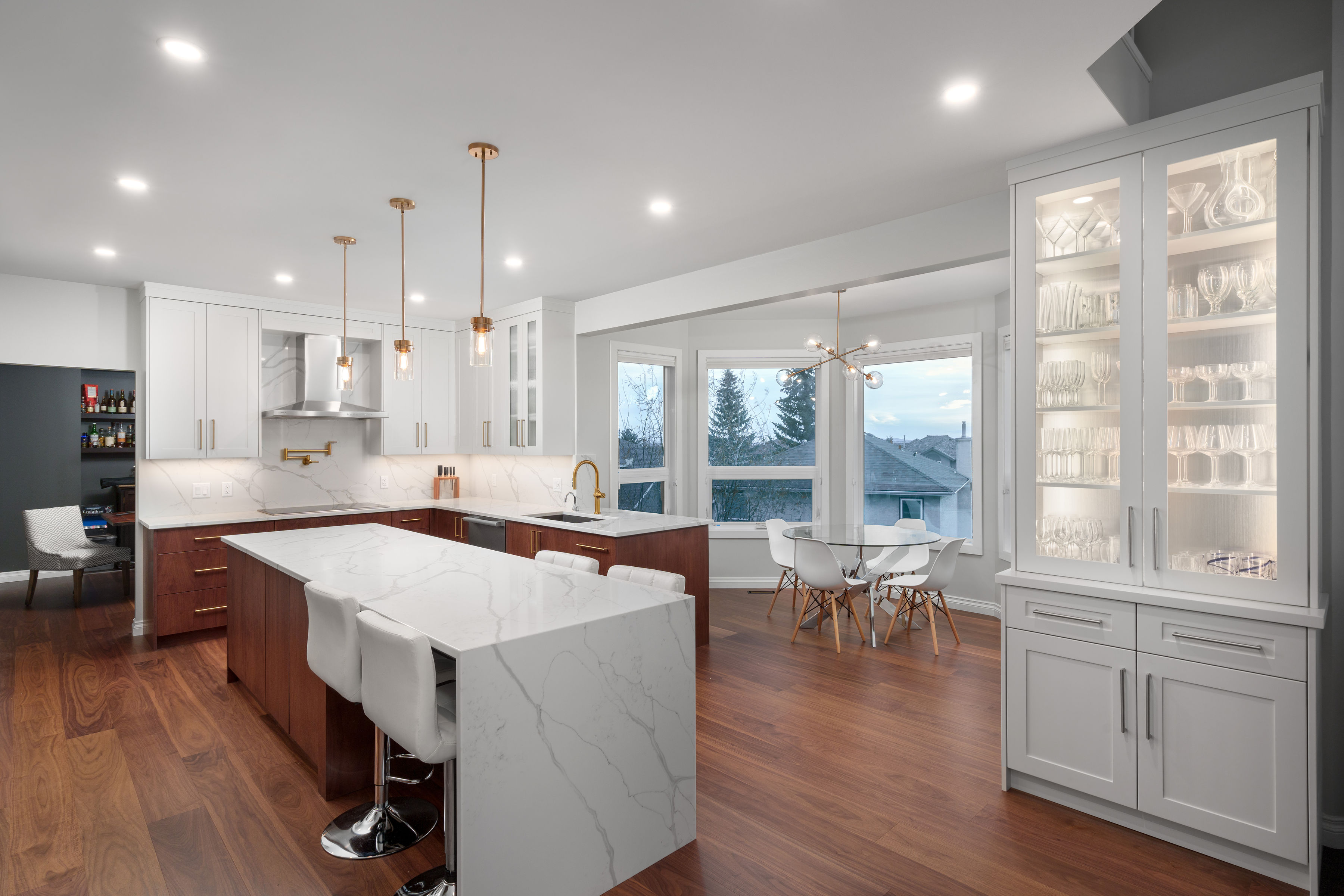
- Standalone glass-front display cabinet with internal LED lighting
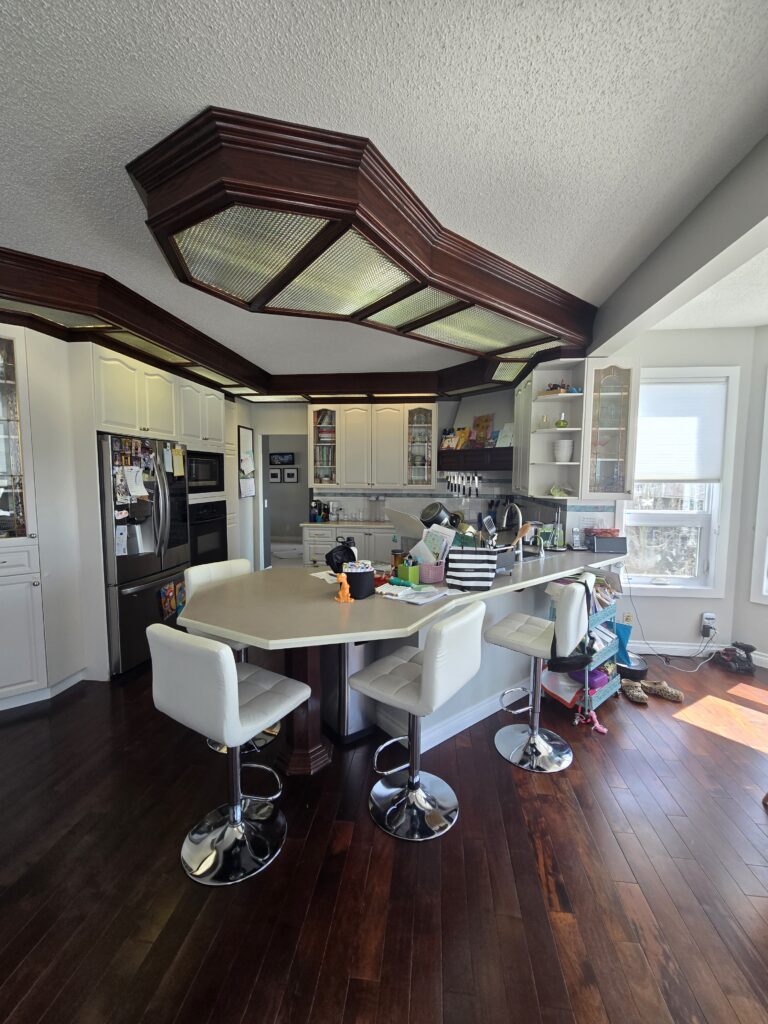
- Flat ceiling with recessed lighting replacing the former stained-glass “sunshine” ceiling
The Transformation
Before/After Slider
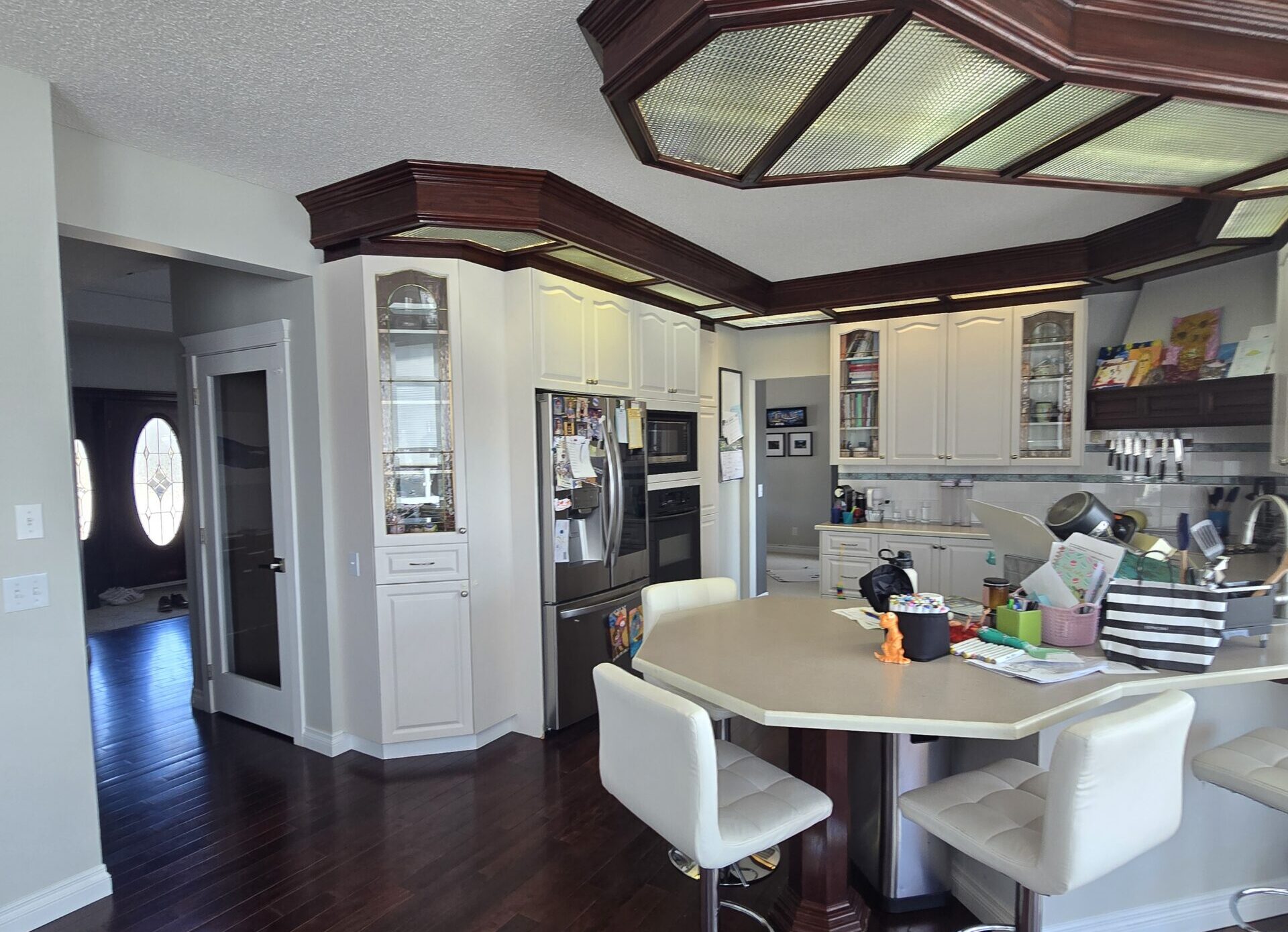
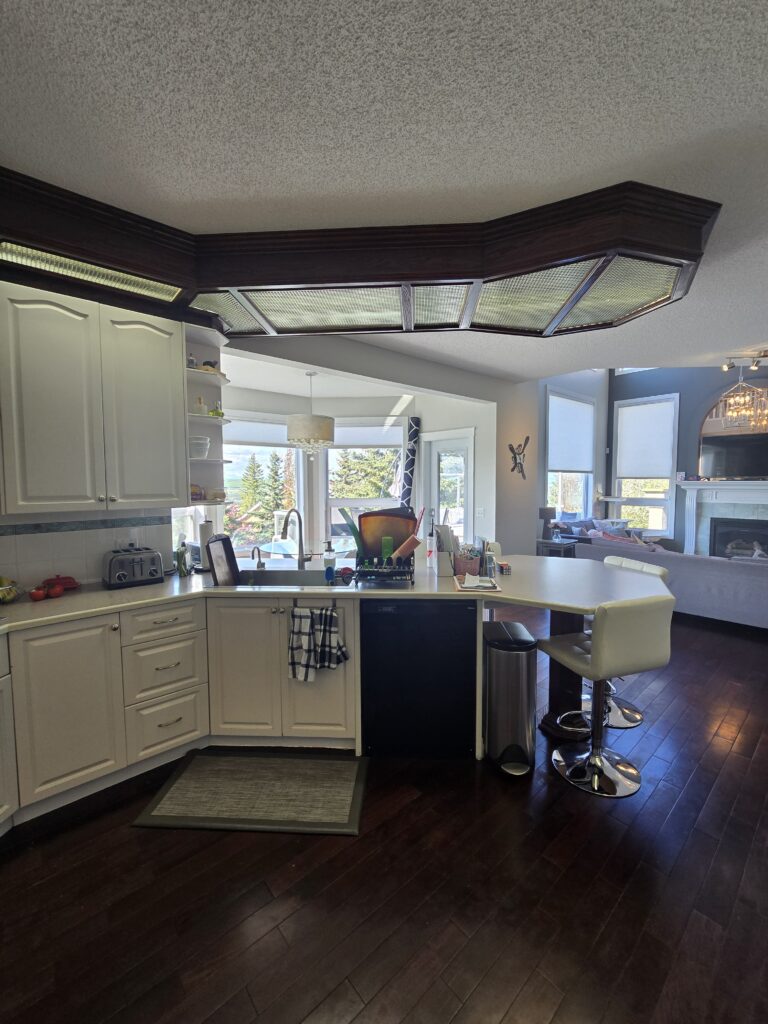
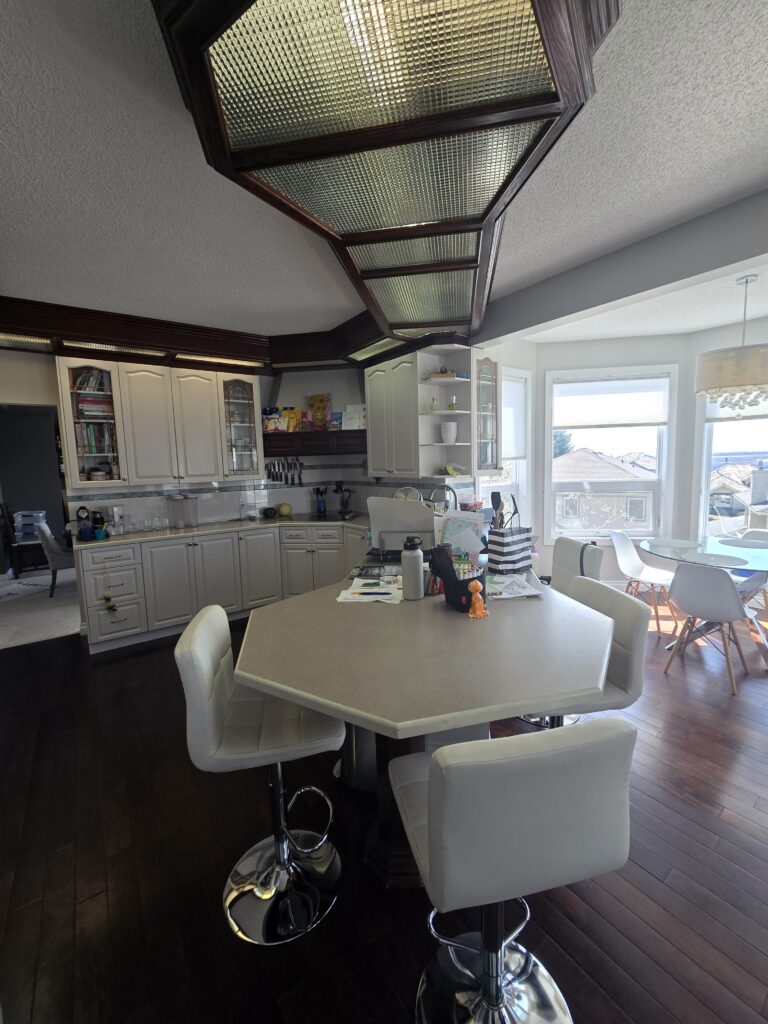
Before Photos
After Photos
Client Feedback
“We engaged Rusch to complete a renovation of our kitchen and living room which they completed on budget and exactly on schedule.
They were dream contractors: respectful, communicative, talented, and dealt with any hiccups/issues calmly and effectively.
We did a lot of research before hiring Rusch and heard from many vendors, customers, etc. that they keep to their schedule. We were skeptical, but our biggest wish was to be back in our kitchen for the holiday season. They delivered on this and so much more.
We love our renovated space – they made our vision come to life and made the process almost painless. I cannot recommend them highly enough!”
– Julia & Chris, Signal Hill Homeowners
Renovation Goals
he homeowners wanted a kitchen that could support real family life with kids and pets while feeling more refined, open, and current. The original space was dominated by dark trim, an ornate stained-glass ceiling detail, and a compartmentalized layout that limited storage and flow. Rather than expanding the footprint, the goal was to make the existing kitchen work harder through smarter planning, improved circulation, and a more cohesive material palette.
- Create a practical kitchen for daily family use
- Add a large island for gathering, prep, and casual seating
- Improve storage without compromising circulation
- Replace dated decorative elements with a cleaner modern aesthetic
- Strengthen the connection between kitchen, dining nook, and family room
The key challenge was to fit a larger island, improved storage, and better work zones into the original kitchen footprint while keeping movement through the main floor comfortable.
Vision
A Brighter Family Kitchen, Everyday Polish
The vision was to create a modern, highly functional kitchen that felt bright and elevated without losing the warmth needed for a busy family home.
- A central island that encourages gathering
- A cleaner ceiling plane with layered lighting
- Rich walnut cabinetry balanced by light upper millwork
- Durable quartz surfaces for daily use
- Better visual flow into the dining nook and family room
Achieving this required a precise redesign of the existing footprint, detailed cabinetry planning, and careful construction sequencing while the family remained in the home.
Design Phase
Creating Clarity Before Construction
The design approach focused on turning a restricted L-shaped kitchen into a more balanced layout with a central island, a larger sink peninsula, stronger storage zones, and a calmer ceiling treatment.
- Replaced the undersized peninsula with a properly scaled island
- Redesigned the right-hand sink peninsula for a stronger secondary work zone
- Extended perimeter cabinetry along the exterior wall
- Added a magic-corner pantry, pull-outs, and integrated charging
- Removed the stained-glass ceiling detail and introduced recessed lighting
- Created a glass-front display hutch with internal LED lighting
BEFORE & AFTER FLOOR PLANS
The floor plan improvements focused on making the original kitchen footprint feel more open, efficient, and connected to the surrounding main-floor spaces.
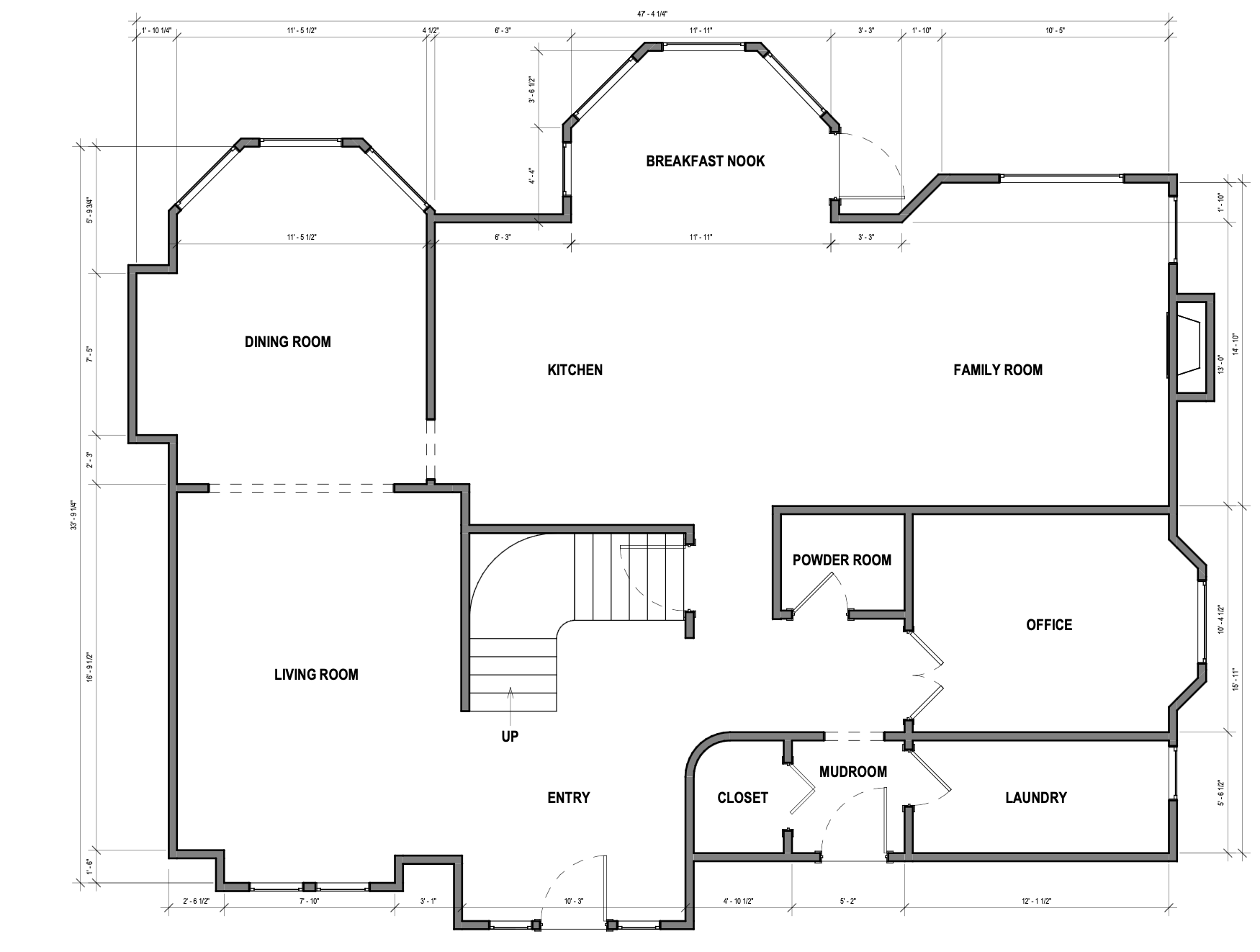
Old Floor Plan
The original kitchen was arranged around a compartmentalized L-shape with an undersized peninsula that limited circulation and interrupted how the space could be used. The layout did not provide the island-style gathering zone the homeowners wanted, and the cabinetry was not taking full advantage of the available walls.
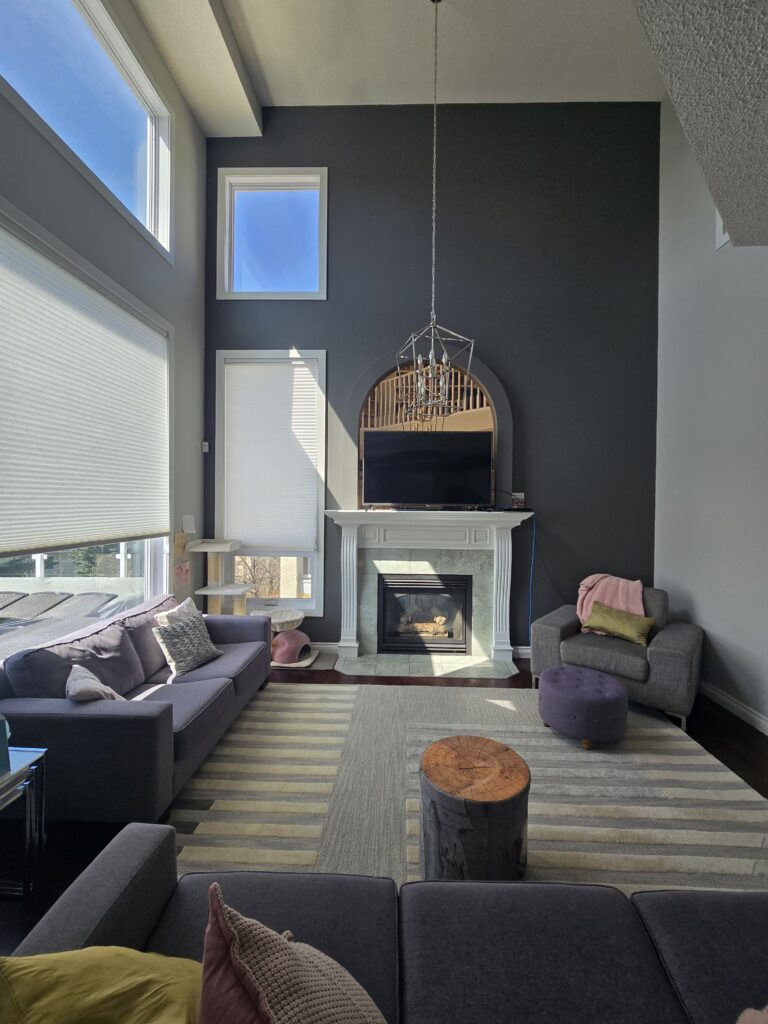
The ceiling also played a major role in how dated the room felt. An ornate stained-glass “sunshine” feature and dark wood trim visually lowered the space, while the surrounding kitchen, breakfast nook, and family room did not read as one continuous main-floor experience.
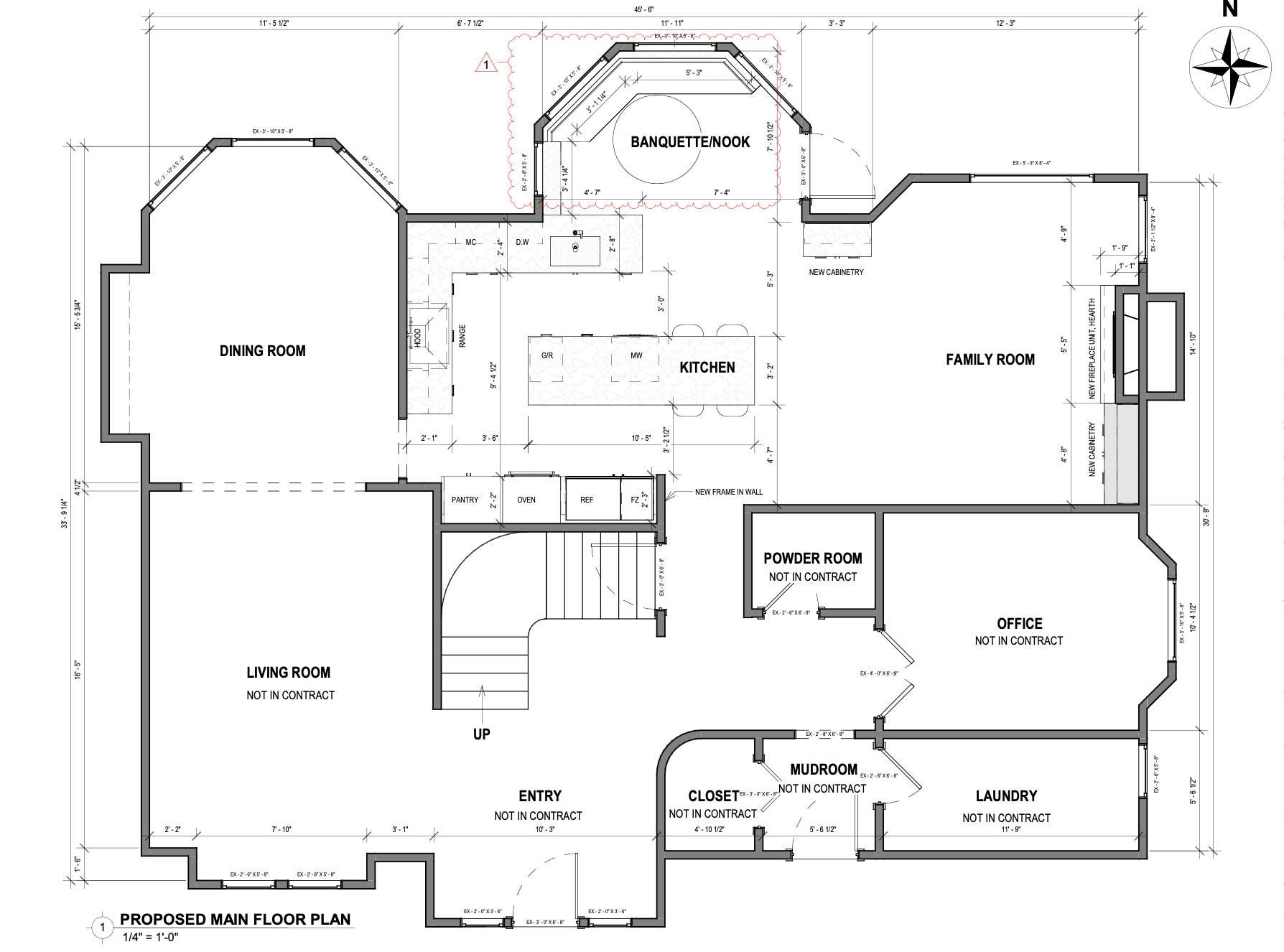
New Floor Plan
The new layout stays within the original footprint but completely changes how the kitchen functions. A generous island now sits at the centre of the room, while a redesigned sink peninsula, cleaner perimeter cabinetry, and improved storage make the work zones easier to navigate.
The kitchen now connects more naturally to the bay-window dining nook on one side and the family room on the other. Continuous engineered hardwood, a flatter ceiling plane, recessed lighting, and a consistent material palette help the kitchen, dining, and living areas feel like one cohesive main-floor space.
3D RENDERINGS
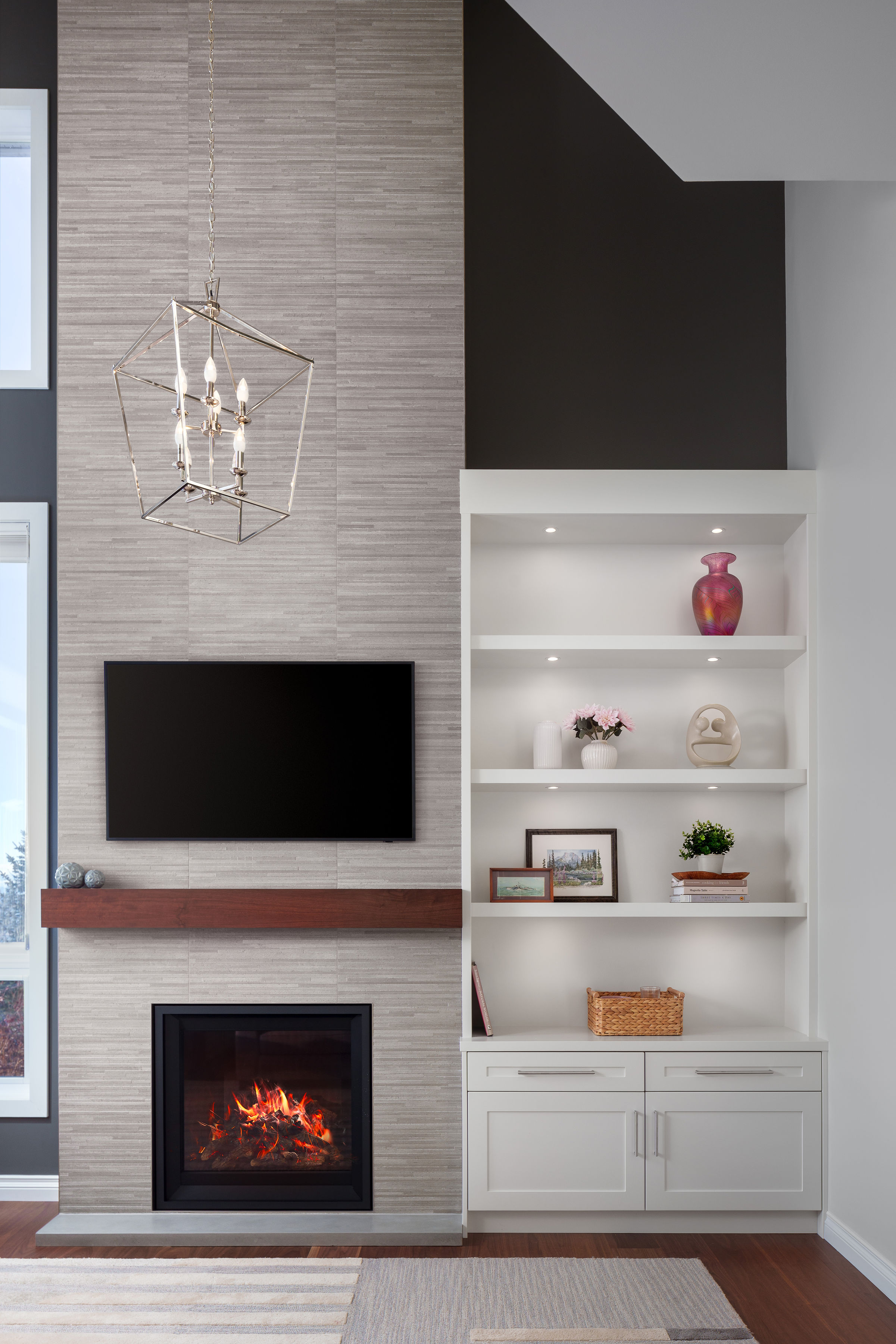
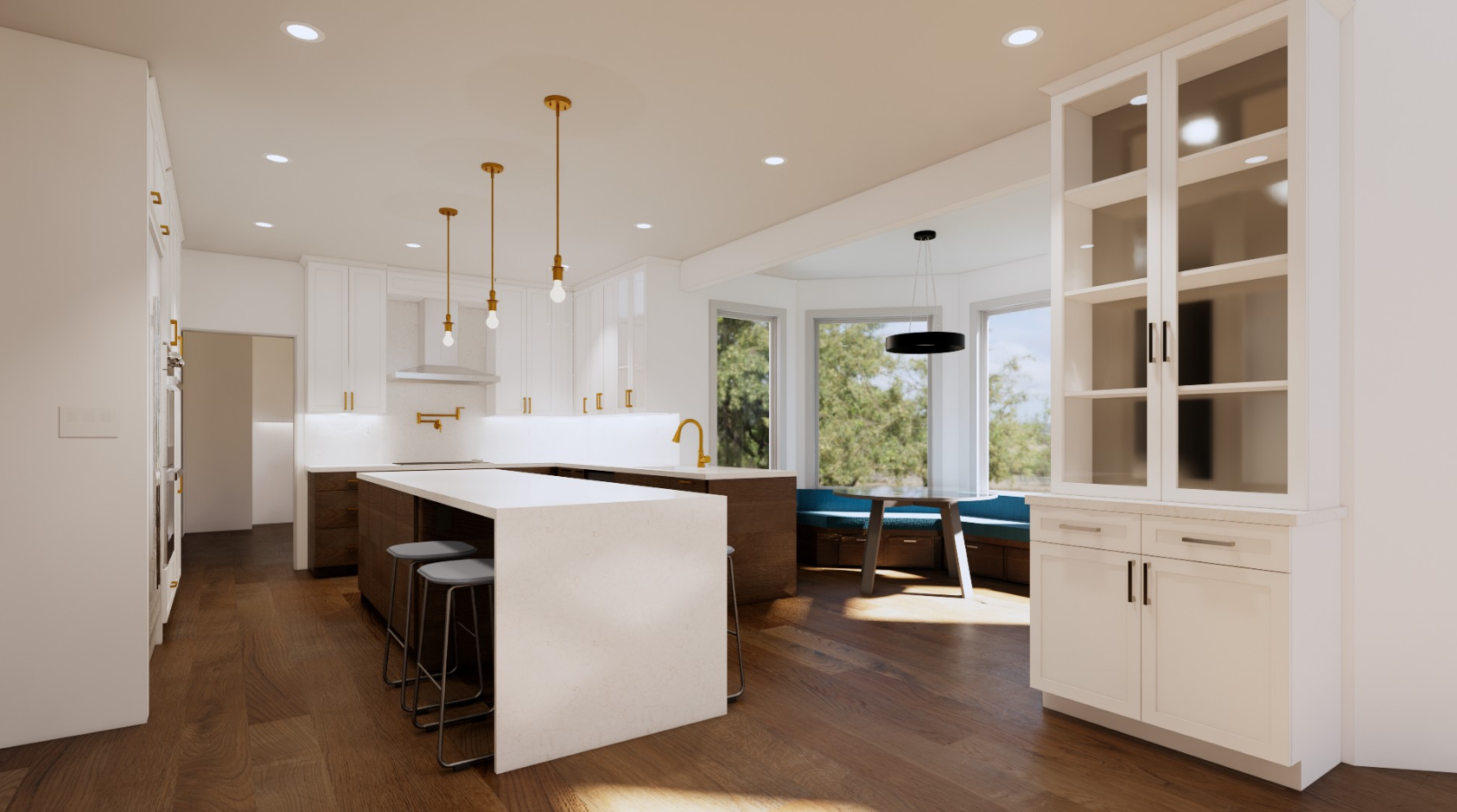
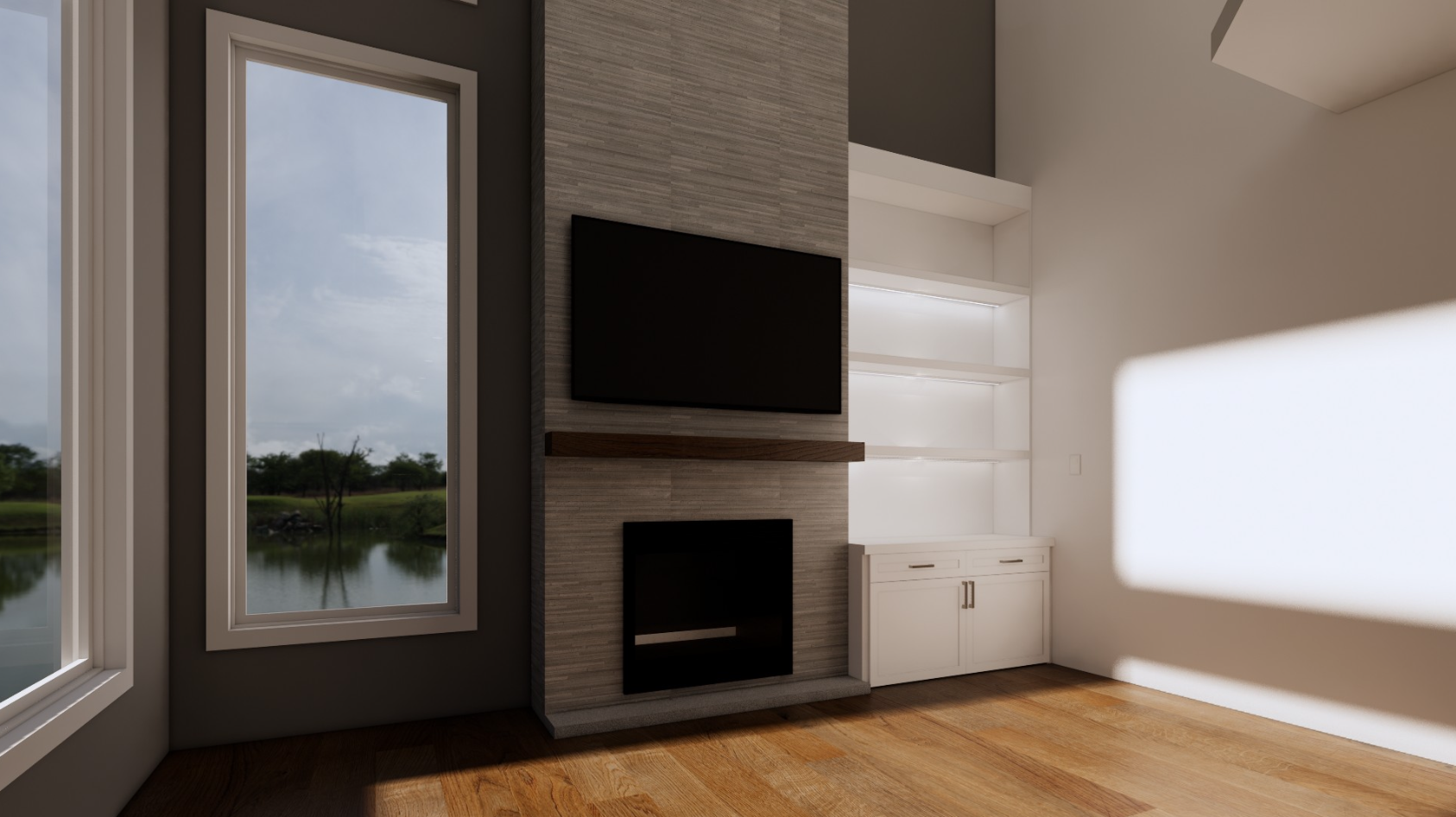
Detailed renderings helped the homeowners understand how the new island, cabinetry, ceiling, lighting, and adjacent living spaces would work together before construction began. Because the project involved refining the existing footprint rather than expanding it, visualization was especially valuable for confirming clearances, storage locations, and sightlines. This clarity allowed selections and layout decisions to be finalized with confidence before the build moved forward.
Kitchen 3D Render
Living Room 3D Render
Construction Phase
Bringing the Design to Life
Construction required careful planning because the homeowners, children, and pets remained in the home throughout the renovation. The team also had to solve a concealed venting challenge, protect adjacent finishes, and coordinate new lighting, cabinetry, plumbing, and flooring within an active household.
- Phased construction with dust containment at the work-zone perimeter
- Removal of existing kitchen cabinetry, plumbing, and dated ceiling details
- New flat-painted ceiling with coordinated electrical rough-in
- Horizontal range hood venting concealed behind upper cabinetry
- New pot filler and plumbing fixtures
- LED strip lighting in display cabinetry and shelving
- Refinished or replaced main-floor flooring for visual continuity
Despite the constraints of the existing footprint and an occupied home, careful staging and detailed planning delivered a brighter, more functional kitchen that now anchors the main floor.