

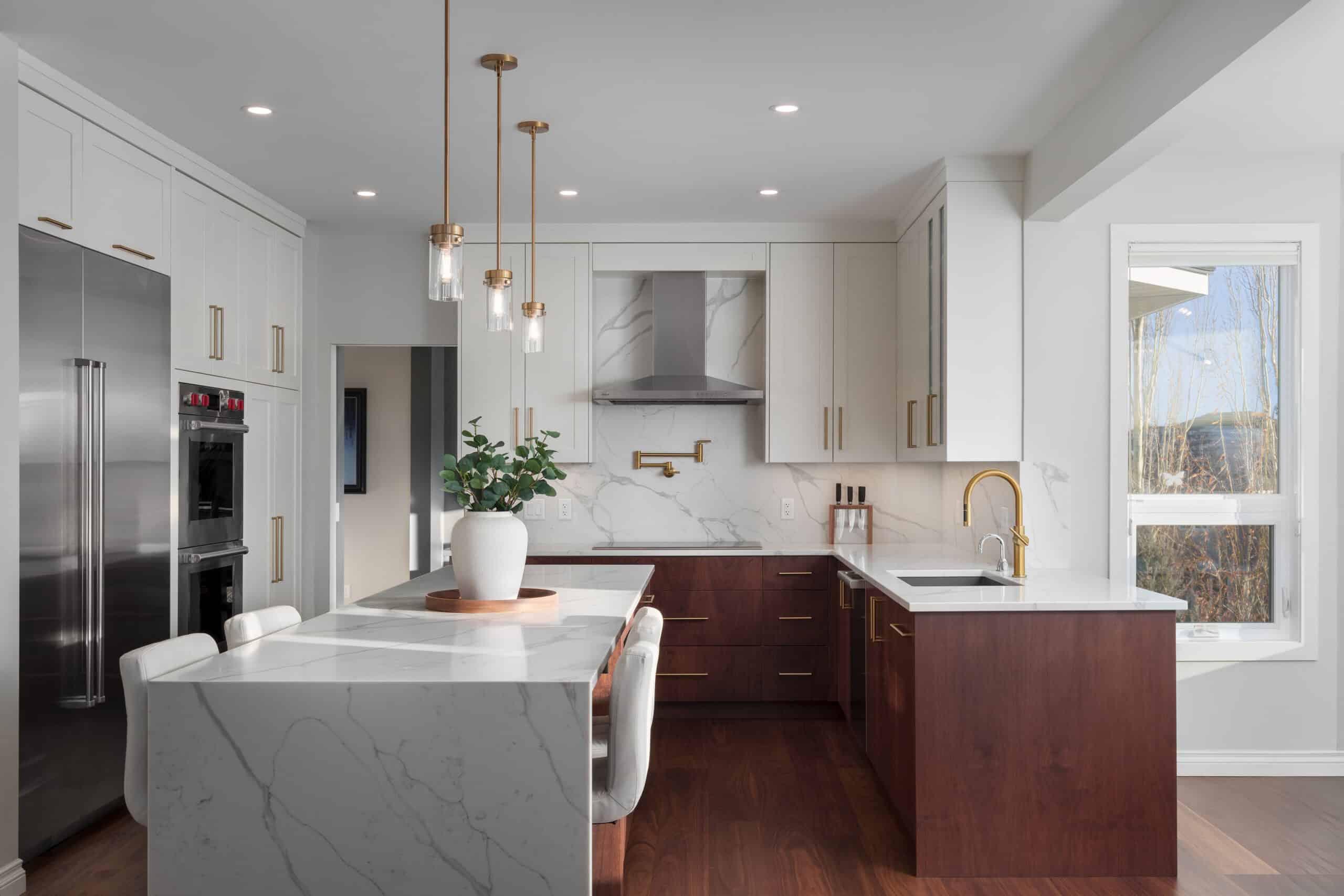

Looking for a fixer-upper instead of a move-in-ready house? Start with the best communities in Calgary for it: the neighbourhoods built between the mid-1950s and the late 1960s. Thorncliffe, Haysboro, Brentwood, Acadia, Mayland Heights, Varsity, Canyon Meadows and Lake Bonavista all fit. You get big old trees, wide lots, and schools and shops that have been there for decades. The houses, though, are 55 to 70 years old. That’s the point. You buy the location, and the renovation is where you build the value.
Where you buy decides what kind of renovation you’re signing up for. A 1950s bungalow and a 1968 split-level don’t share the same problems. The wiring’s different, the plumbing’s different, and even the floor plans fight you in different ways. Below, we go community by community, then decade by decade, and finish with the checks worth doing before you firm up an offer. To see what is for sale in each of these neighbourhoods right now, browse Calgary Listing Hub’s community guides, which pair current listings with a short guide to each area.
The short list: the best communities in Calgary for renovators
Most “best neighbourhoods in Calgary” lists rank liveability. We ranked these on something narrower. Is the location established? Is the lot decent? And is the house old enough that there’s real value left to add?
| Community | Quadrant | Established | Why renovators look here | Plan your budget around |
|---|---|---|---|---|
| Thorncliffe | N (NW/NE) | 1954 | Mid-century bungalows next to Nose Hill Park | Original electrical and plumbing; asbestos-era materials |
| Haysboro | SW | 1958 | Post-war homes close to Heritage station and Macleod Trail | Ageing services; mixed housing stock, so compare carefully |
| Collingwood | NW | 1959 | Mid-century character in a pricier market | Higher purchase price means tighter math on major work |
| Brentwood | NW | 1960 | Brentwood LRT, University of Calgary and Nose Hill Park | Aluminum-wiring era; dated layouts |
| Acadia | SE | 1960 | Fairmount Drive shops, Heritage CTrain, river pathways | Aluminum-wiring era; check basements for moisture |
| Mayland Heights | NE | 1962 | Quick access to downtown and Deerfoot; established Italian community | Aluminum-wiring era; compare against rental-heavy streets |
| Canyon Meadows | SW | 1965 | Fish Creek Park, golf course and its own CTrain station | 1960s systems now near end of life |
| Lake Bonavista | SE | 1967 | Calgary’s original lake community | Homeowners association fees on top of the renovation budget |
| Varsity | NW | 1963 (built through early 1970s) | Generous detached lots, Market Mall, transit and the university | Late-1960s to 1970s systems; split-level layouts |
Establishment dates come from each community’s public history (Wikipedia, citing City of Calgary records). Keep in mind that’s when building started, not when the house you’re looking at went up. Check the year on the listing, and on the land title too.
What prices look like right now
Here’s the math that matters. If the purchase price plus the renovation comes to more than a finished house on the same street, the project doesn’t work. So start with prices. This is where detached homes sat in September 2026, according to the Calgary Real Estate Board (CREB):
| CREB district | Detached benchmark, Sept 2026 | Change vs Sept 2025 |
|---|---|---|
| City Centre | $981,300 | +0.7% |
| West | $993,700 | +2.7% |
| North West | $781,400 | -0.7% |
| South | $709,400 | -0.8% |
| South East | $698,900 | -1.6% |
| North | $640,200 | -3.8% |
| North East | $556,600 | -6.0% |
| East | $476,200 | -5.0% |
| Citywide | $739,400 | -1.0% |
Source: CREB Calgary Monthly Statistics Package, September 2026.
Prices swing a lot from one community to the next. Zoocasa’s 2026 ranking for MoneySense had 2025 averages around $631,000 in Brentwood, $651,000 in Canyon Meadows, $654,000 in Varsity and Collingwood About $1.10 million. A flat-to-soft market like this one is good news for renovators, too. Sellers of dated houses have less leverage, so there’s more room to negotiate.
The house’s decade tells you what the renovation will involve
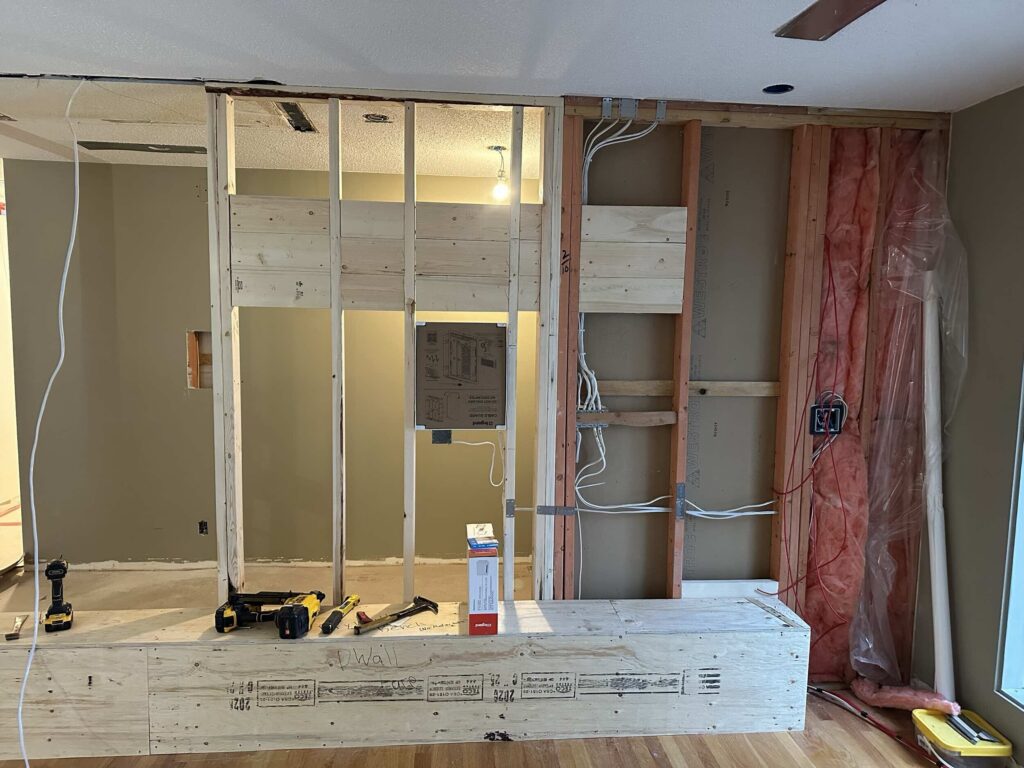
For a renovator, the year built is the most useful number on any listing. It matters more than the square footage, and more than the price per foot, because it tells you what’s probably hiding behind the drywall.
| If the home was built… | Watch for | Why it matters |
|---|---|---|
| Before the 1990s | Asbestos in drywall compound, plaster, textured ceilings, floor tiles and vermiculite attic insulation | Alberta’s real estate association notes almost every Canadian home built between the 1920s and the 1990s will have some asbestos. Test before you open walls, and use abatement professionals where needed. |
| Mid-1960s to late 1970s | Aluminum branch wiring | It can be managed safely, but it needs a licensed electrician’s assessment and can affect insurance. |
| 1978 to 1997 (most common 1985 to 1997) | Poly-B plumbing (grey plastic pipe) | Insurers in Alberta increasingly ask about it and may charge more or decline coverage until it is replaced. |
| 1995 to 2007 | Kitec plumbing (orange and blue pipe, brass fittings) | Recalled in 2005 for corrosion and burst risk. Plan for replacement. |
| Any home with an original furnace | Furnace and air conditioning past 15 to 20 years | Budget for replacement as part of the renovation, not later. |
On our short list, the first two rows are the ones to worry about. Take a 1960s bungalow in Brentwood or Acadia. Before anyone picks a paint colour, it might need an electrical upgrade and hazardous-materials testing. Those are exactly the costs that turn a good deal sour. Get them priced before you firm up.
A closer look at each community
1950s bungalow belts: Thorncliffe, Haysboro and Collingwood
Thorncliffe (established 1954) is wedged between Nose Hill Park and Deerfoot Trail. Haysboro (1958) started life as the Hays dairy farm, and today it’s a short hop to Heritage station and Macleod Trail. Collingwood (1959) has plenty of mid-century character, and prices to match.
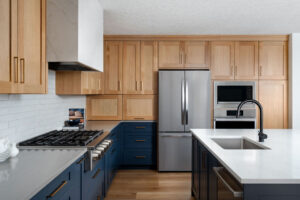
These are the oldest houses here, and usually the biggest jobs. Think electrical service upgrades, tired plumbing and drain lines, and small closed-off kitchens. The upside? This is where opening up the main floor, putting in a new kitchen and finishing the basement changes the house the most.
1960s communities close to transit: Brentwood, Acadia, Mayland Heights and Canyon Meadows
All four date from 1960 to 1965, and each has a CTrain station nearby or a quick run downtown. Brentwood sits right next to the University of Calgary and has its own LRT stop. Acadia has the Fairmount Drive shops and Heritage station. Mayland Heights, first called Crossroads, sits close to downtown between Memorial Drive and the Trans-Canada Highway. Canyon Meadows backs onto Fish Creek Provincial Park and has its own CTrain station.
The catch is that houses here were built right in the aluminum-wiring years, so put an electrical assessment on your due-diligence list. The transit access pays off later, though, when it’s time to sell.
Late-1960s family communities: Varsity and Lake Bonavista
Varsity went up through the 1960s and early 1970s. It’s mostly detached houses on good-sized lots, and Varsity Estates is the high-end pocket. Lake Bonavista (1967) was Canada’s first community built around a man-made lake. Owners have to join the homeowners association that looks after the lake, so add those fees to your running costs.
These younger homes often need less structural work than a 1950s bungalow. Expect more of a finishes-and-layout job, plus swapping out the late-1960s and 1970s mechanical systems.
Check the zoning before you plan a suite or an addition
Planning a basement suite, a backyard suite or extra units on the lot? Check the property’s current land use district before you do anything else. Calgary’s 2024 citywide rezoning was repealed by City Council on April 8, 2026. From August 4, 2026, about 99% of affected properties returned to their pre-2024 districts, such as R-C1 and R-C2. A few parcels kept their 2024 zoning because a permit or application was already in the works.
Heads up: older guides and listings may still call a lot R-CG. Don’t take their word for it. Confirm the current district on the City of Calgary’s land use map, and call the City’s Planning Services Centre if you are unsure.
Know which work needs a permit
You’ll need a City of Calgary building permit to develop a basement for the first time, move or take out walls on any floor, or cut new openings for windows and doors. Electrical work and new or altered plumbing need their own trade permits. Paint, flooring and new fixtures? Generally no permit needed.
Put a kitchen and a bathroom in the basement and, in the City’s eyes, it’s a secondary suite. That needs its own suite permit. The City’s Secondary Suite Registry lists suites that have been permitted and inspected. So if a listing brags about a “legal suite”, look it up on the registry.
Check the flood maps for river-valley homes
A number of older communities back onto the Bow and Elbow rivers. In the floodway, the City won’t allow new buildings, apart from rebuilding on the same footprint. In the flood fringe, any addition has to be designed to handle flood damage. Before you buy near a river, check the Government of Alberta flood map at floods.alberta.ca, which was updated for Calgary in November 2025, and the City’s regulatory flood map.

Five checks before you firm up an offer
- Get a full home inspection. On an older house, it pays for itself. Add a camera scope of the sewer line: those big mature trees often send roots into older lines, and the stretch on your property is yours to fix.
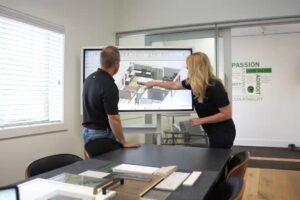
- Walk the house with a renovation contractor before your conditions expire. A design-build team can tell you which walls hold the house up, whether your plans are realistic and roughly what they’ll cost. Rusch’s whole-home renovation timeline shows how long each stage usually takes.
- Test for hazardous materials if you plan to open walls or ceilings in a pre-1990s home, and plan a long-term radon test once you move in. Health Canada recommends testing every home, and if you’re finishing the basement, deal with radon before the drywall goes up.
- Call your insurer about the wiring and plumbing before you commit. Aluminum wiring, Poly-B and Kitec can all change your premium, or whether you get coverage at all.
- Confirm the zoning and permit history with the City, especially for basement suites, additions and finished basements.
And build a contingency into the budget for whatever turns up once the walls come down. In houses this age, something always does.
Need to borrow for the work? Ask your lender about a purchase plus improvements mortgage. It rolls the cost of planned renovations into the mortgage you use to buy. Most lenders want contractor quotes before they’ll approve it, which is one more good reason to get a renovation team through the house while your conditions are still open.